CIVDECODED
Karosel
Kisah visual dari feed kami — masing-masing beberapa slide yang membongkar cara dunia bekerja. Geser di sini saja.
-
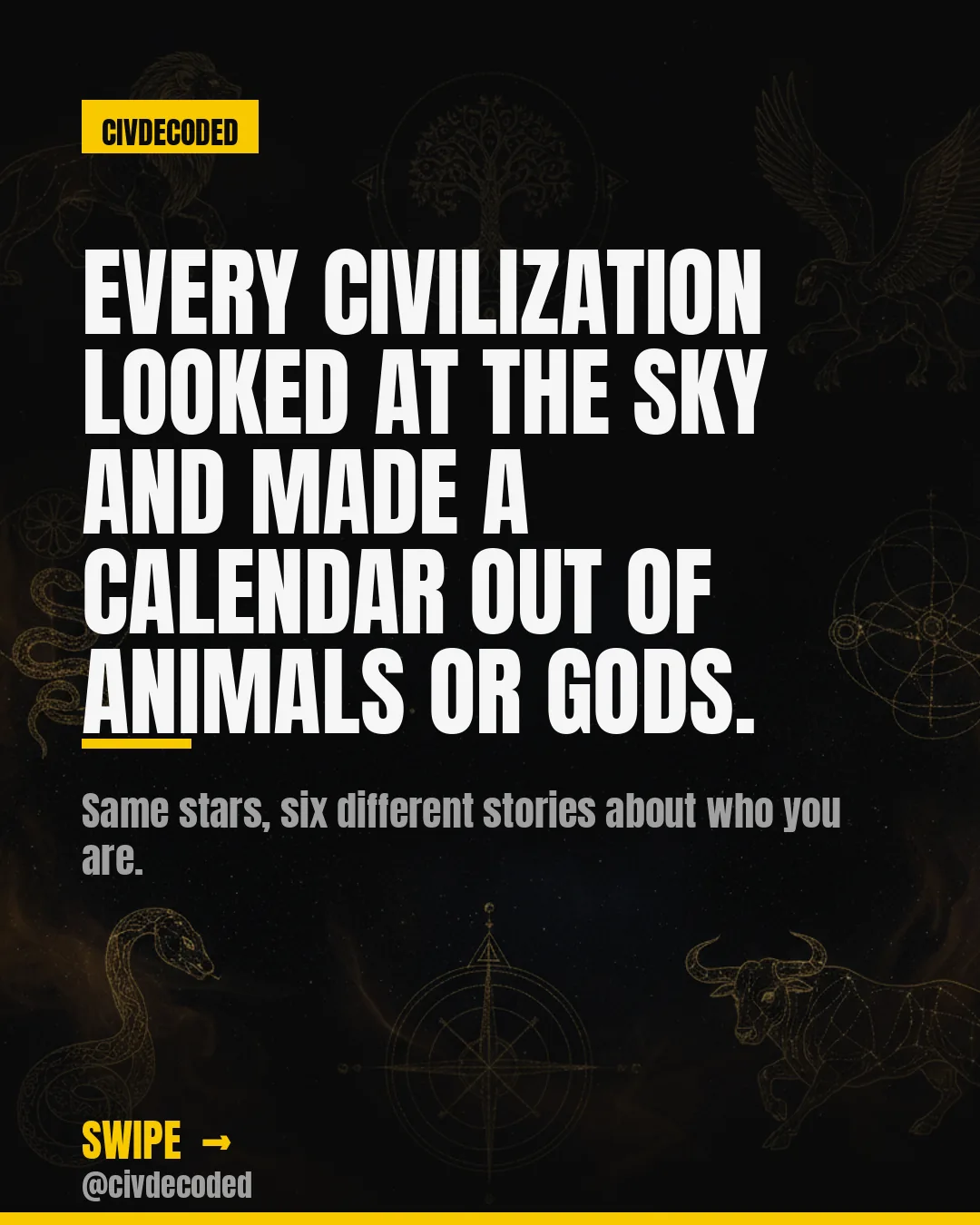
8 slide Every civilization looked at the sky and made a calendar out of animals or gods.
Six zodiac systems — same stars, six different stories about who you are.
-
9 slide A country that doesn't exist — and the 7 that replaced it.
Thirty years ago this was one nation. Then it split into seven.
-
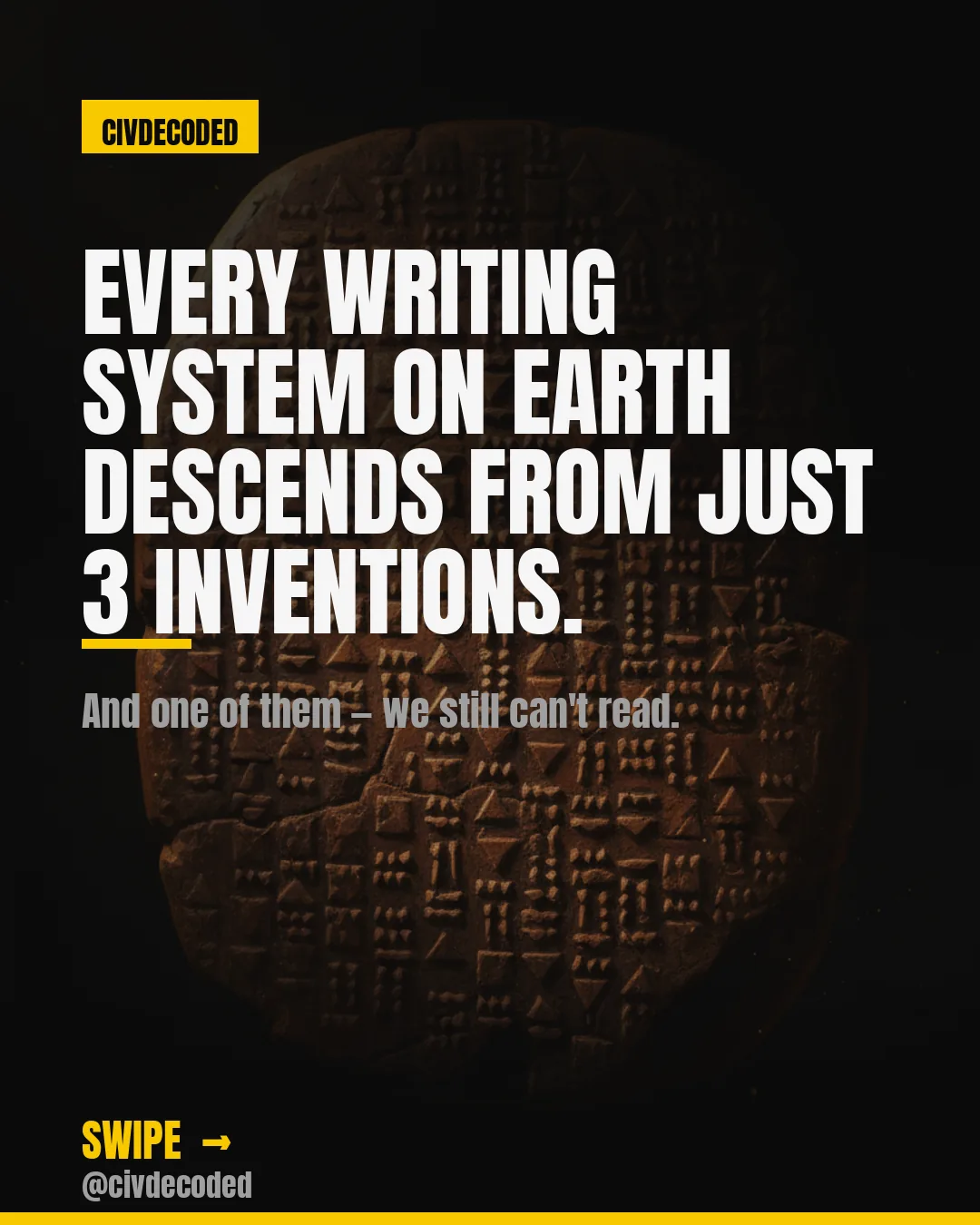
9 slide Every writing system on Earth descends from just 3 inventions.
And one of them — we still can't read.
-
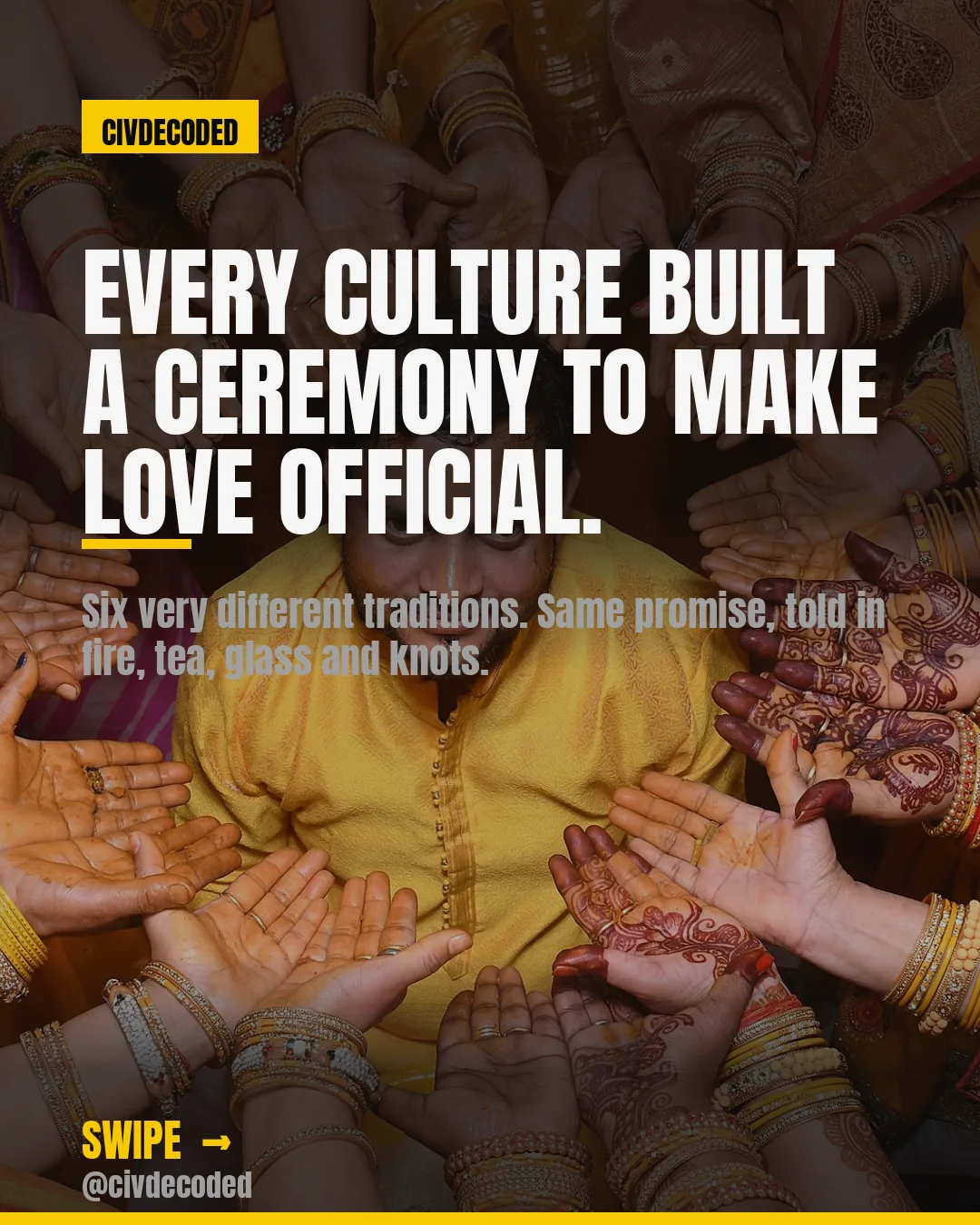
9 slide Every culture built a ceremony to make love official.
Seven wedding traditions — fire, tea, glass, cattle, cord and sake.
-
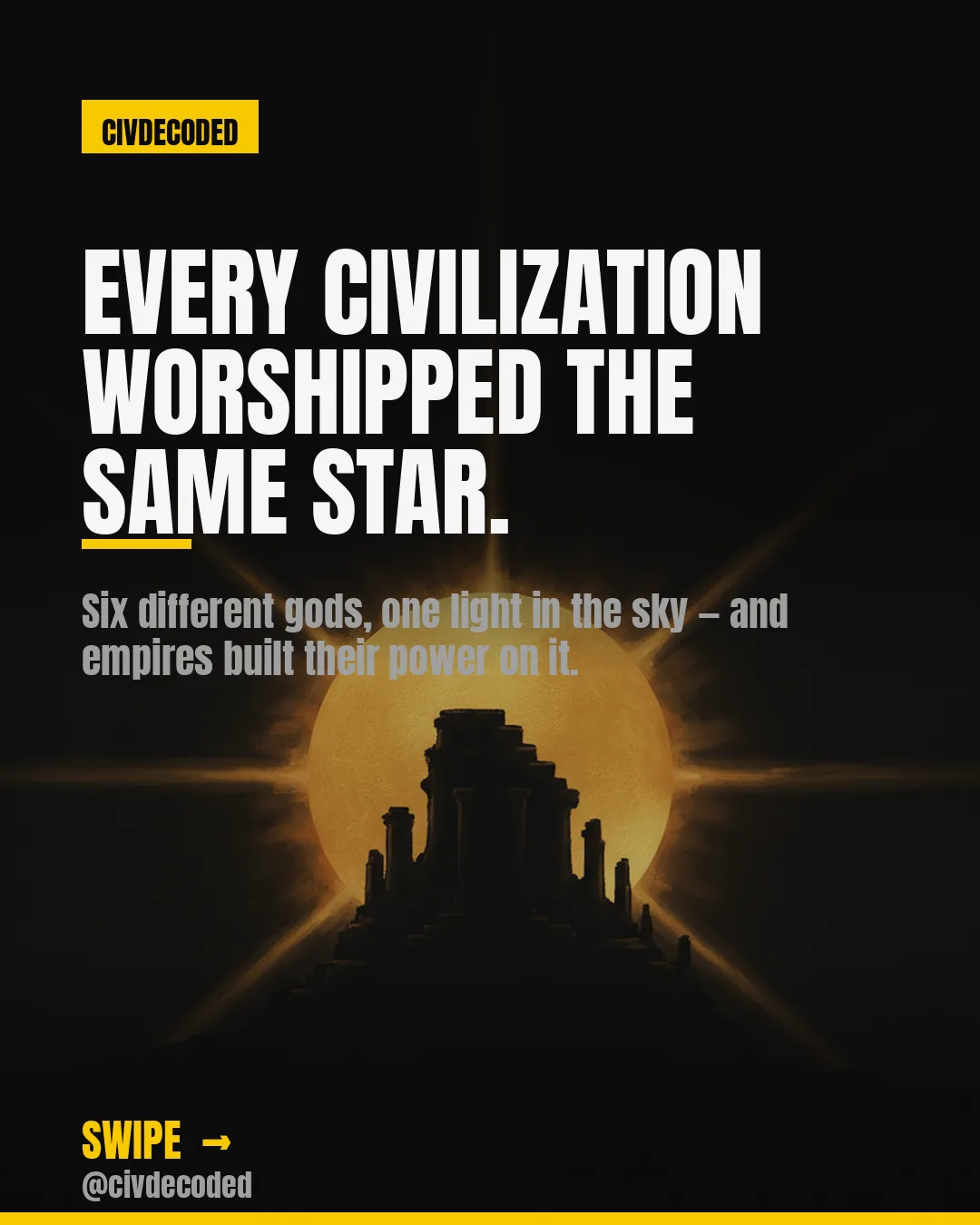
9 slide Every civilization worshipped the same star.
Six different gods, one light in the sky — and empires built their power on it.
-
9 slide Why did civilizations worship rivers?
From a flood god's yearly gift to a river with legal human rights — seven waterways ancient and modern cultures believed were alive.
-
9 slide Every civilization built a tower to reach the sky.
Different gods, different continents, the same impulse: build up, closer to heaven.
-
9 slide Which animals did ancient civilizations worship?
Seven cultures, seven sacred creatures — and the beliefs that made them untouchable.
-
8 slide Peoples that survived, peoples that disappeared, and peoples that became someone else entirely.
Six peoples, six different fates — from the largest ethnic group on Earth to a language with no living relatives.
-
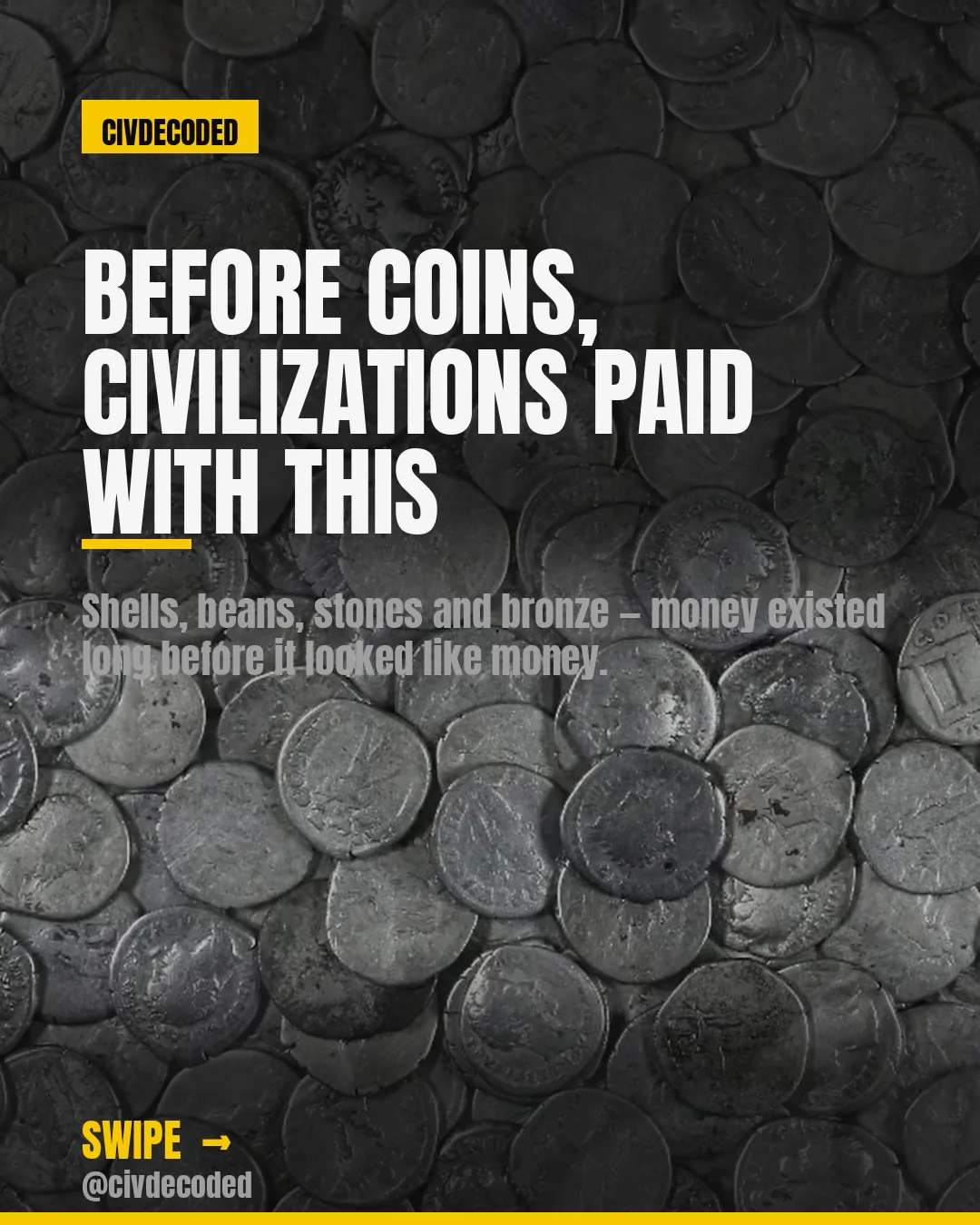
9 slide Before coins existed, civilizations paid with shells, beans, stones and bronze.
Seven currencies that came before coins — and worked just as well.
-
10 slide The map has a word for every way land meets sea.
Eight landforms decoded — you've seen all of these, you probably can't name half.
-
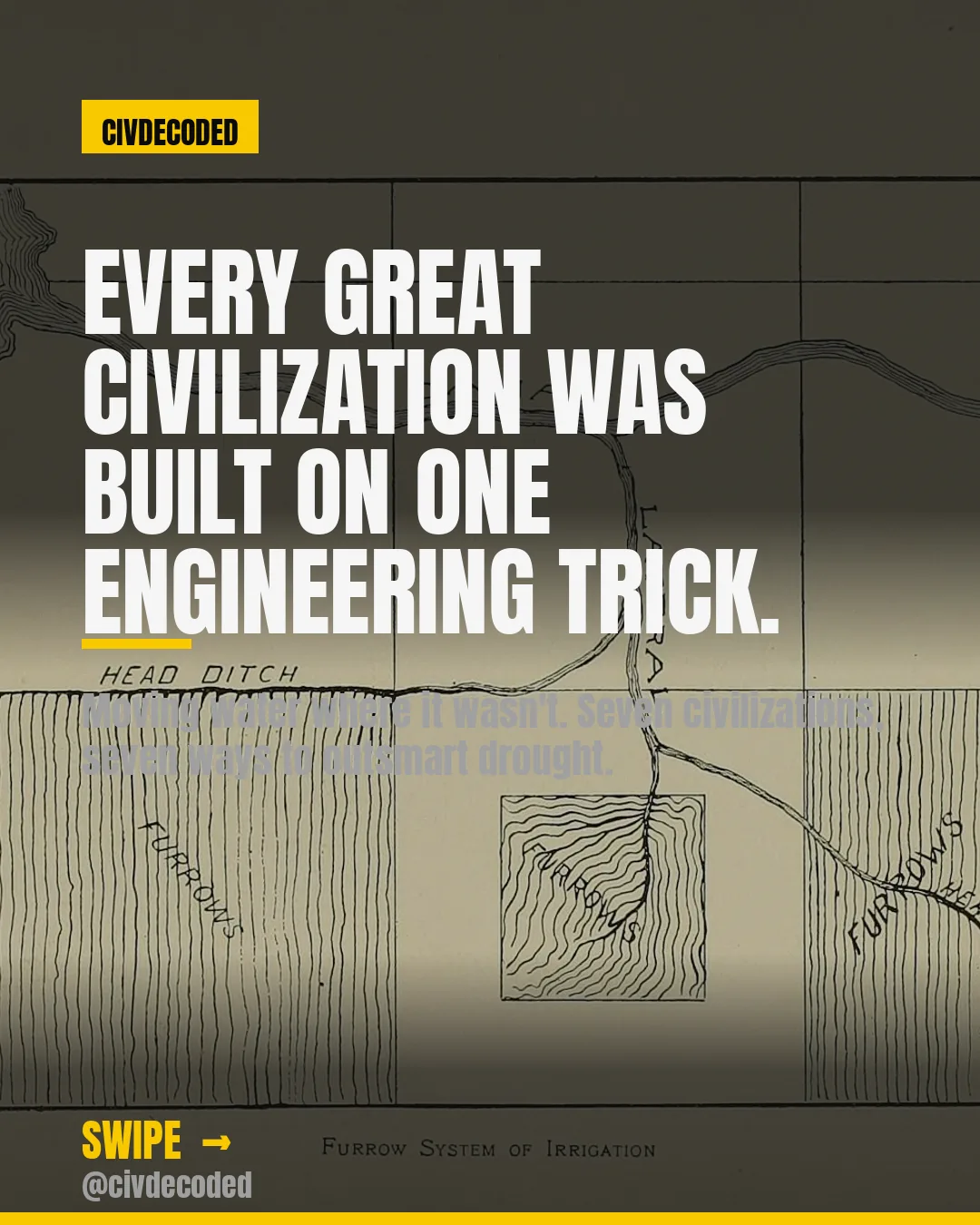
9 slide Every great civilization was built on one engineering trick.
Seven irrigation systems — from Persian qanats to Roman aqueducts, all solving the same problem: water in the wrong place.
-
10 slide One people, 5,000 years ago. Half the planet speaks them now.
Eight branches of one language family — from Greek philosophy to the English you're reading this in.
-
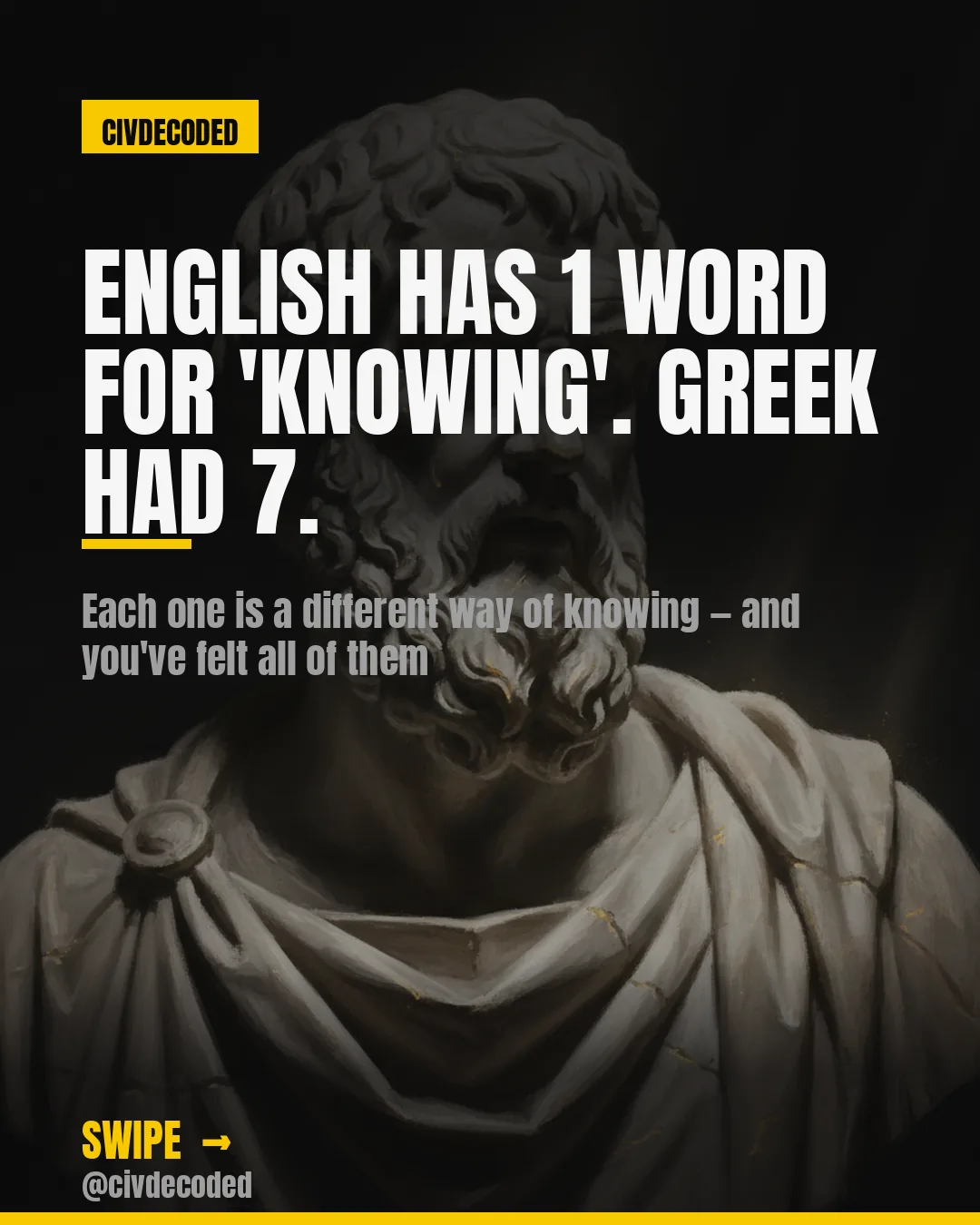
9 slide English has 1 word for 'knowing'. Greek had 7.
Seven Greek words for knowledge — and you've felt every one of them.
-
10 slide Every civilization started with a myth — not a man.
8 founding myths — the men, wolves, and gods each civilization needed to be true.
-
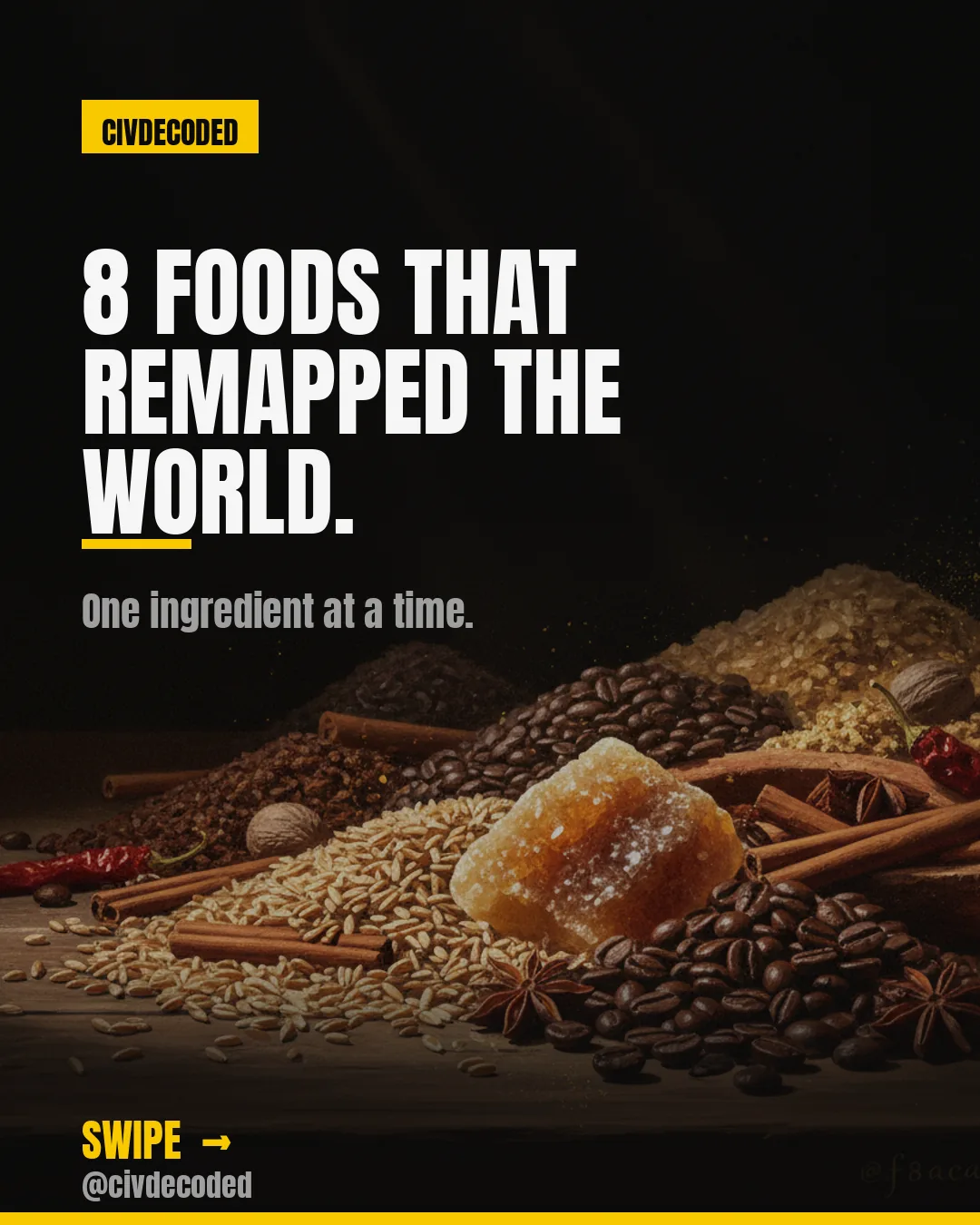
10 slide 8 foods that remapped the world.
One ingredient at a time — from wheat's first governments to tea's revolution.
-
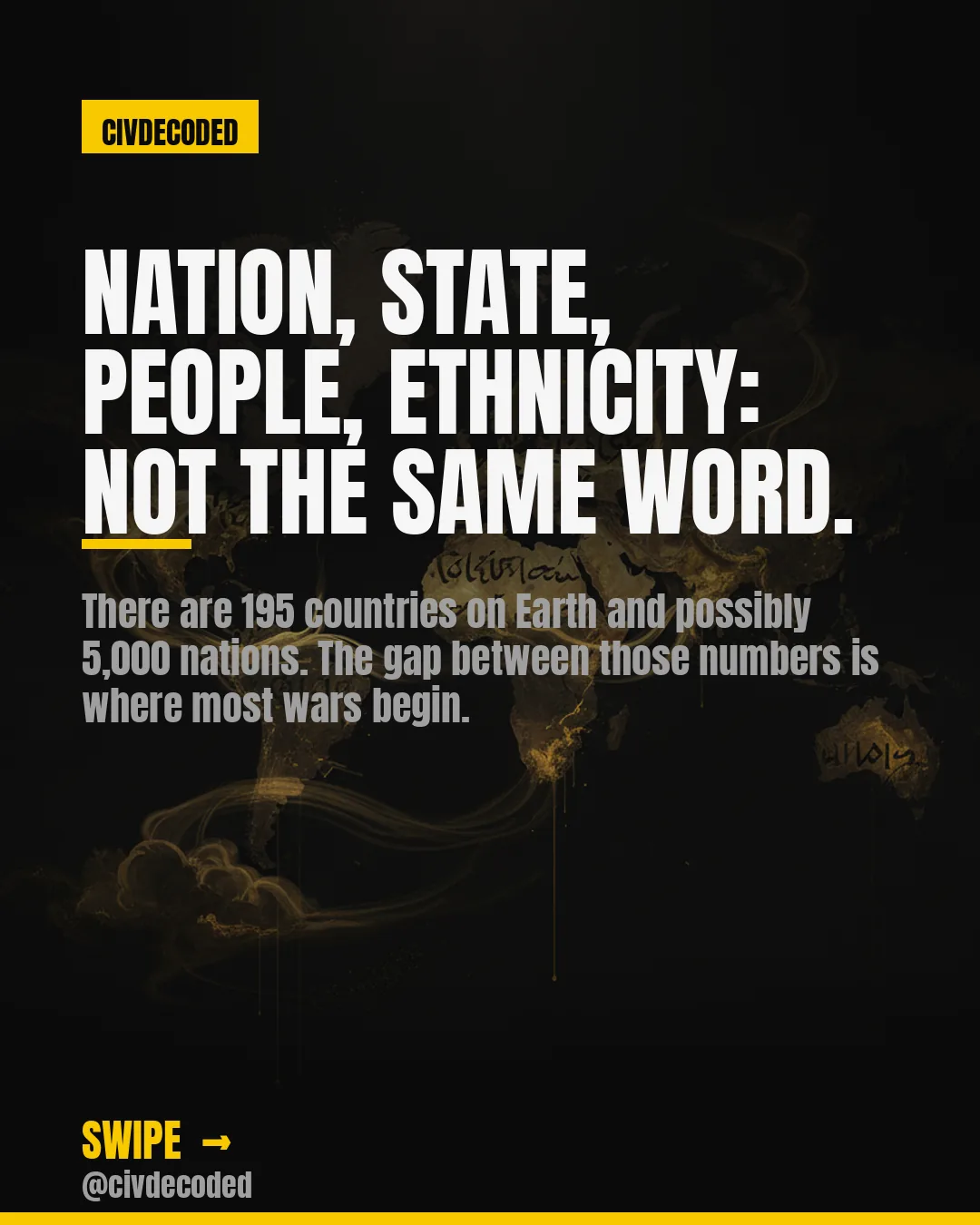
8 slide Nation, state, people, ethnicity: not the same word.
Six concepts that decode the language of group identity — and the gap between them where most wars begin.
-
9 slide Every empire in history followed the same arc.
Ibn Khaldun mapped this seven-stage cycle in 1377 — asabiyyah to collapse — and it still holds.
-
9 slide Every civilization asked how the world began.
Seven creation myths, zero contact between them — Genesis to Ymir, and how each one answers the same first question.
-
10 slide Brazil has peoples most Brazilians never met.
Whole cultures living inside one country — and invisible to it.
-
9 slide Every great civilization built a place to store all human knowledge.
Most of them burned.
-
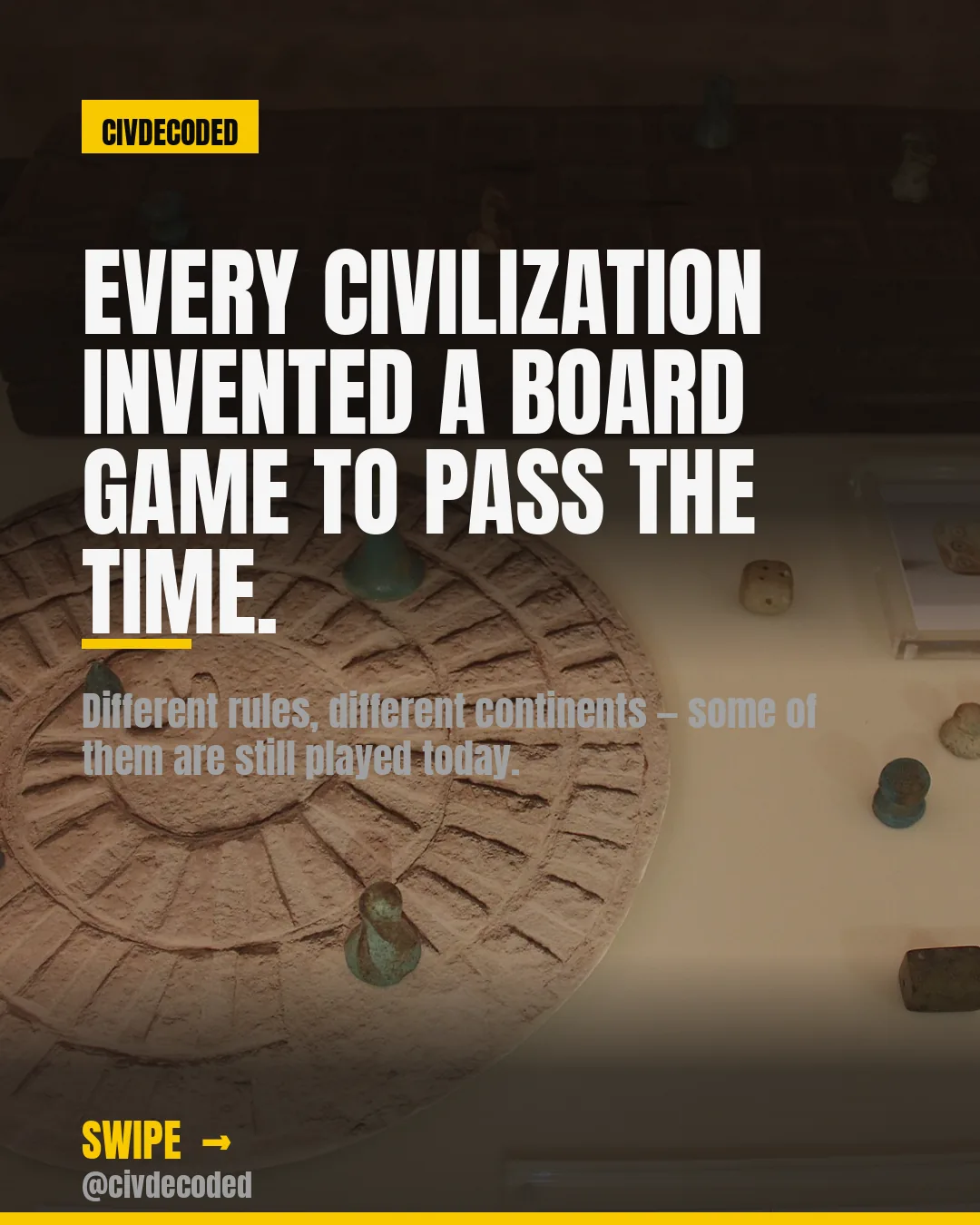
9 slide Every civilization invented a board game to pass the time.
Different rules, different continents — some are still played today.
-
9 slide Every civilization had to answer the same question: what do we do when someone leaves?
Seven funeral rites — same farewell, infinite forms.
-
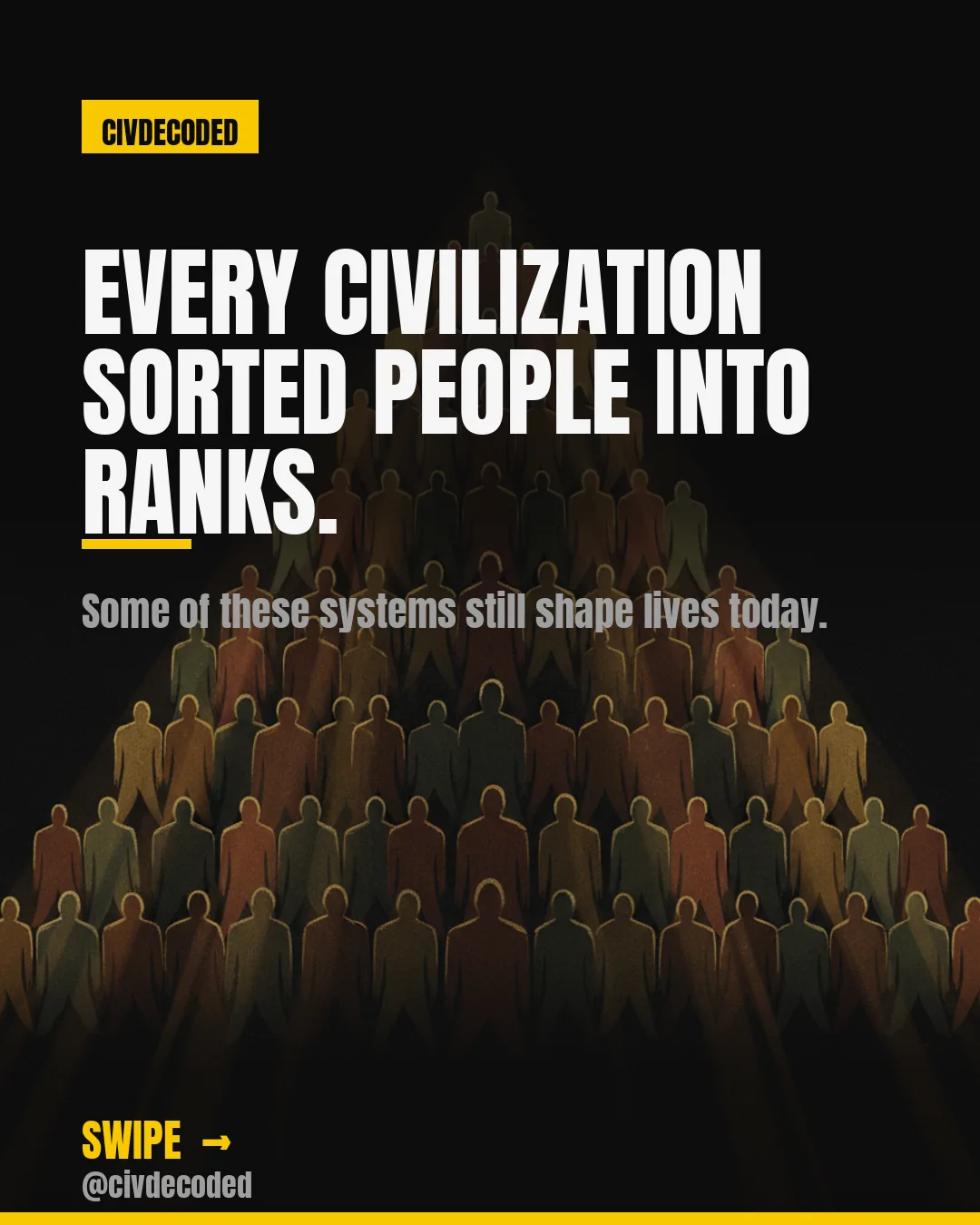
9 slide Every civilization sorted people into ranks — and the systems looked eerily similar.
Seven caste and class systems — different continents, same pyramid.
-
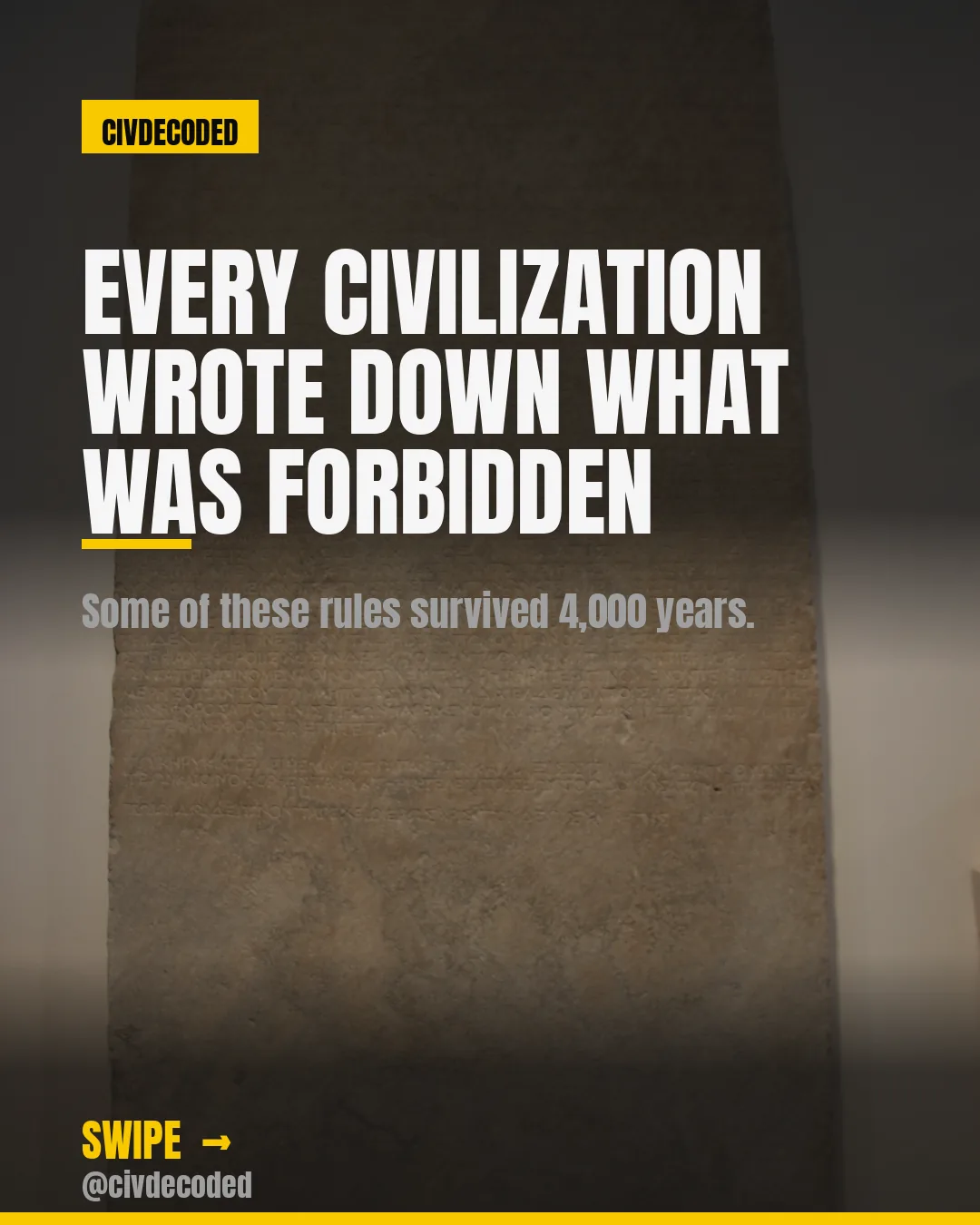
9 slide Humanity wrote down what was forbidden 4,000 years ago — and never stopped.
Seven law codes — some of these principles still live in your own constitution.
-
9 slide Every culture marks the day you stop being a child. Some make you earn it.
Seven coming-of-age rituals — growing up was never meant to be easy.
-
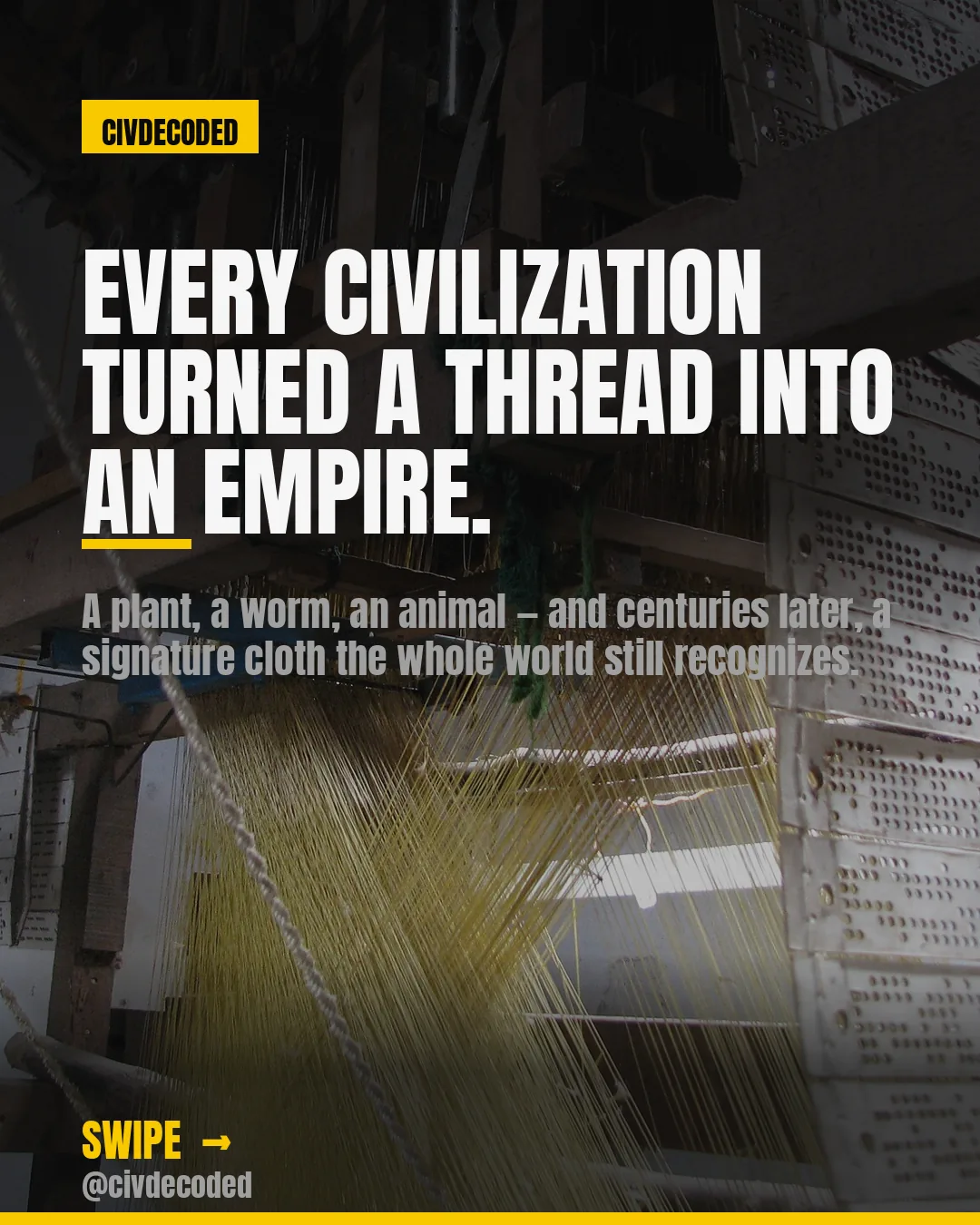
9 slide Every civilization turned a thread into an empire.
Seven textiles — cloth was never just cloth, from state secrets to banned tartans.
-
9 slide Every civilization needed a god who never lost.
Seven war gods — same need, different faces: someone to guard the gates.
-
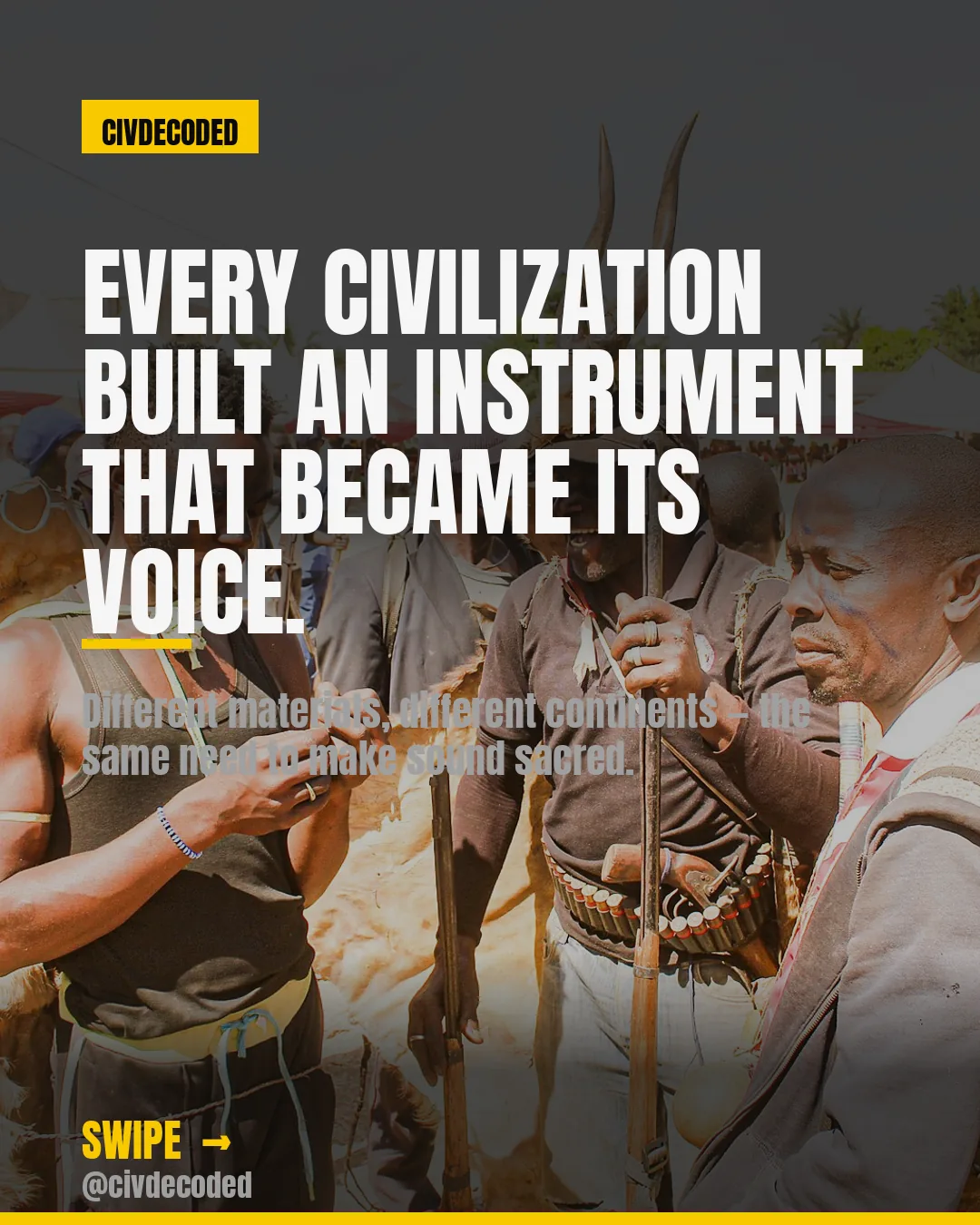
9 slide Every civilization built an instrument that became its voice.
Seven instruments — close your eyes and you know exactly where each one is from.
-
9 slide Every corner of Earth was reached by someone who walked, sailed, or rode there first.
Seven human migration routes — your DNA remembers at least one of these journeys.
-
9 slide Every civilization crowned a supreme ruler — and most claimed the job came from the gods.
Seven royal titles — power always needed a story about where it came from.
-
9 slide Every culture drew a line on the plate: this, you do not eat.
Seven food taboos — the rules differ, but the instinct to draw a line is universal.
-
9 slide Civilizations were inventing extreme sports thousands of years before ESPN.
Seven ancient sports — from a Maya ball court that doubled as a temple to Mongolia's 800-year-old games.
-
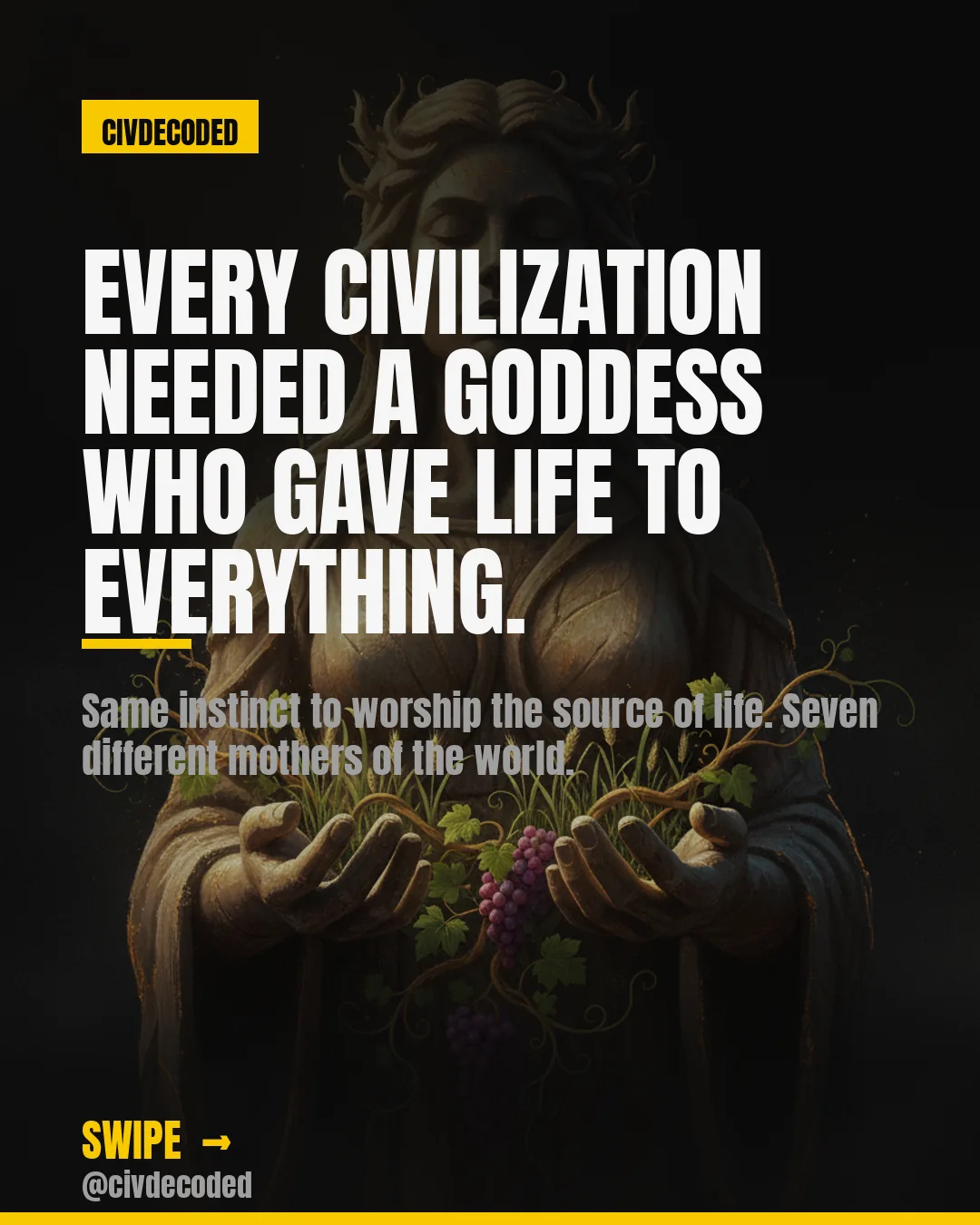
9 slide Before father gods ruled the sky, mothers ruled the Earth.
Seven mother goddesses — some still worshipped today, thousands of years after their first altar.
-
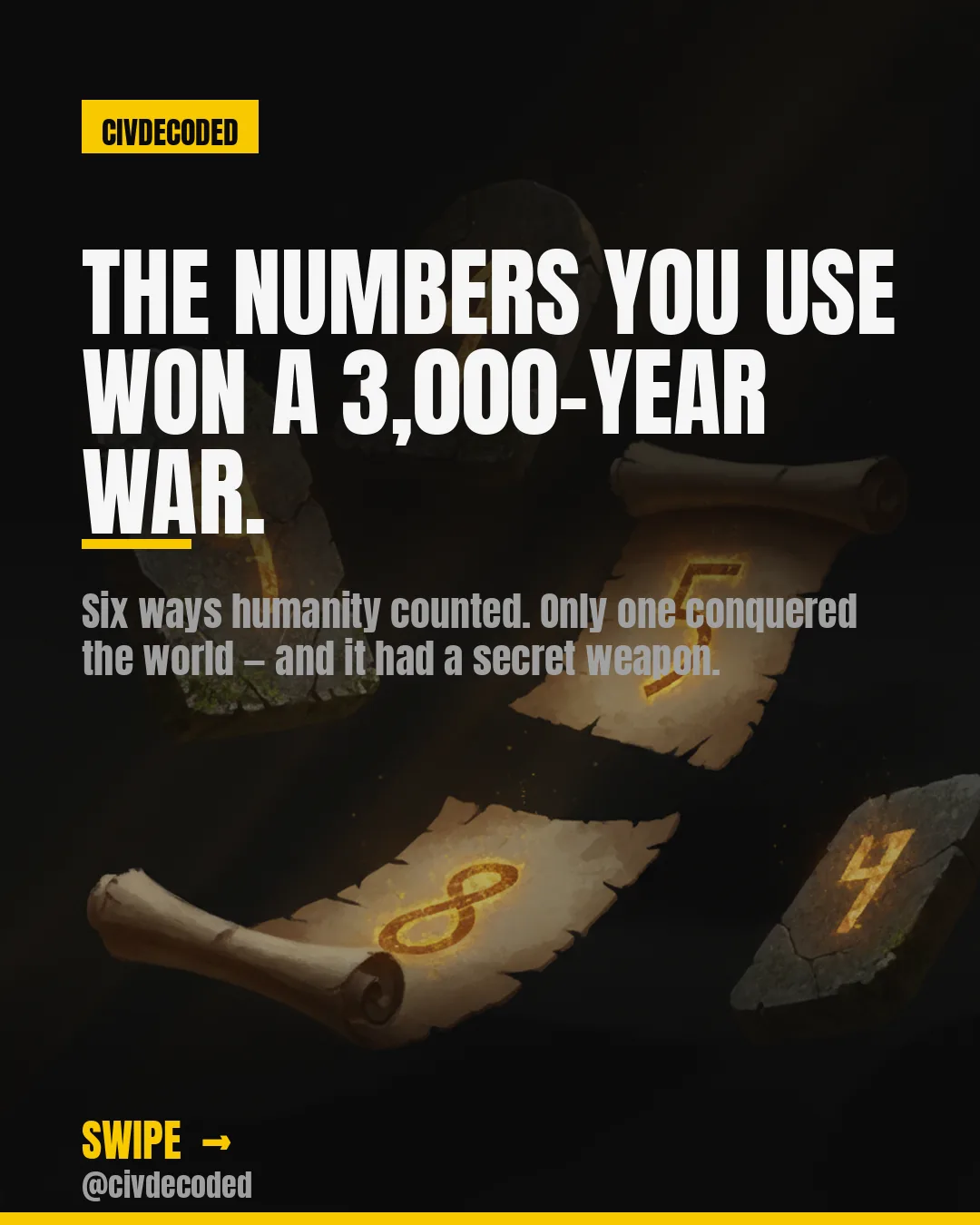
8 slide The numbers on your screen won a 3,000-year war.
Six number systems, one winner — the place-value system with zero you're reading right now.
-
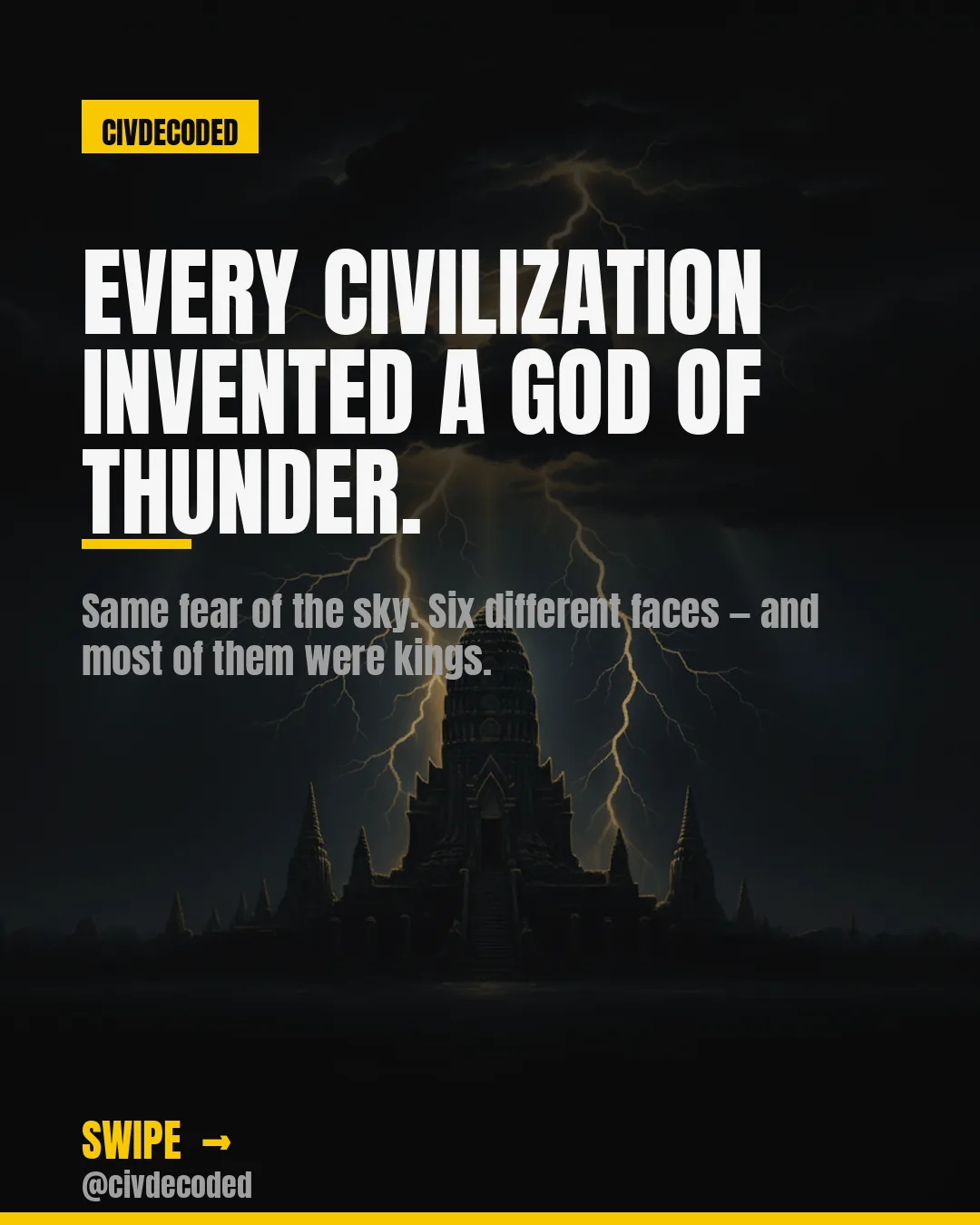
8 slide Every civilization looked at the storm and saw a king.
Six thunder gods, six cultures that never met — most of them ruled all the other gods too.
-
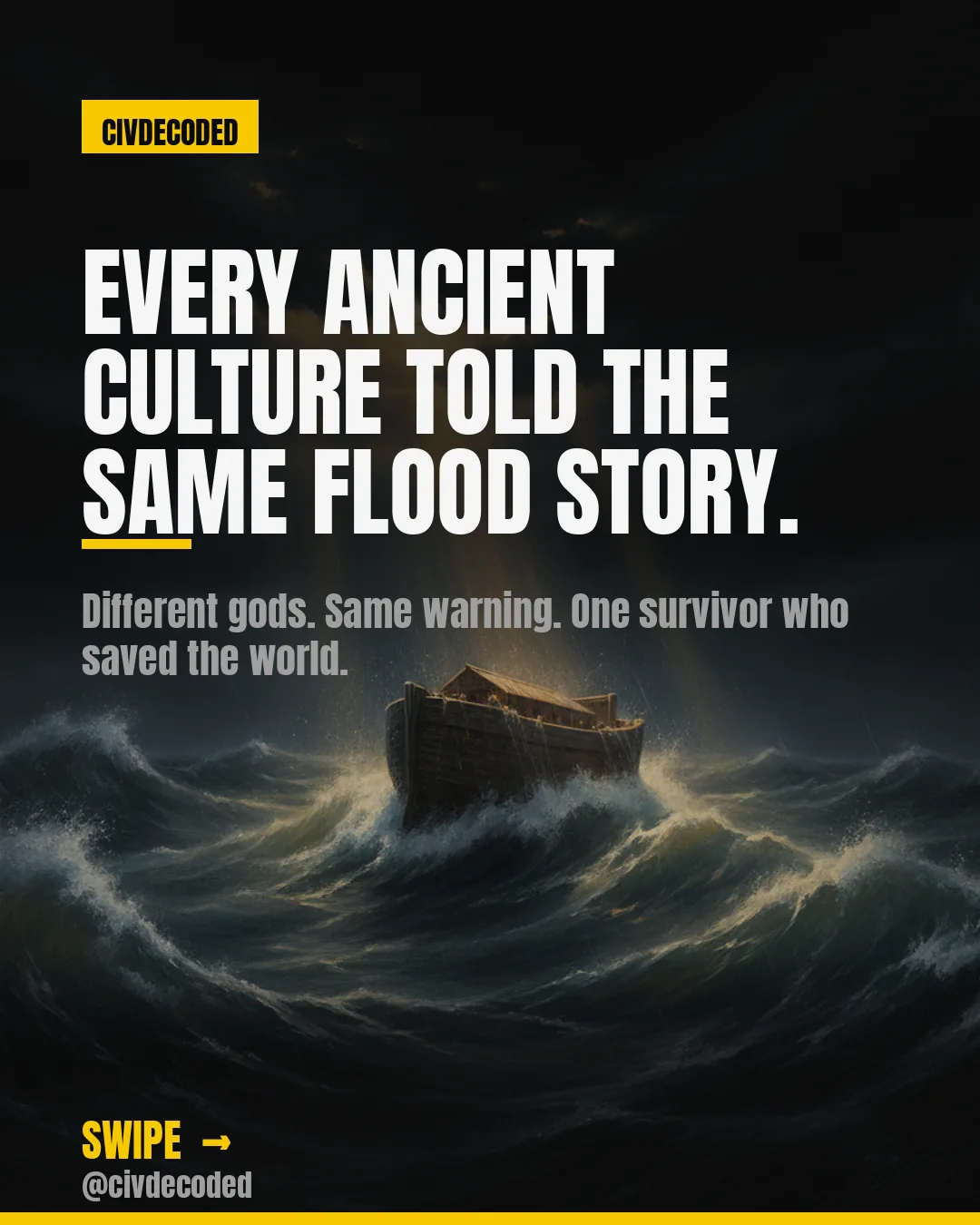
8 slide Cultures that never met all remembered the same flood.
Six flood myths, six civilizations that never met — one story: the world drowns, one survivor saves life.
-
10 slide What year is it? Depends who you ask.
Eight living calendars, eight civilizations — eight different answers to the same question.