← All carousels

Before coins existed, civilizations paid with shells, beans, stones and bronze.

Seven currencies that came before coins — and worked just as well.
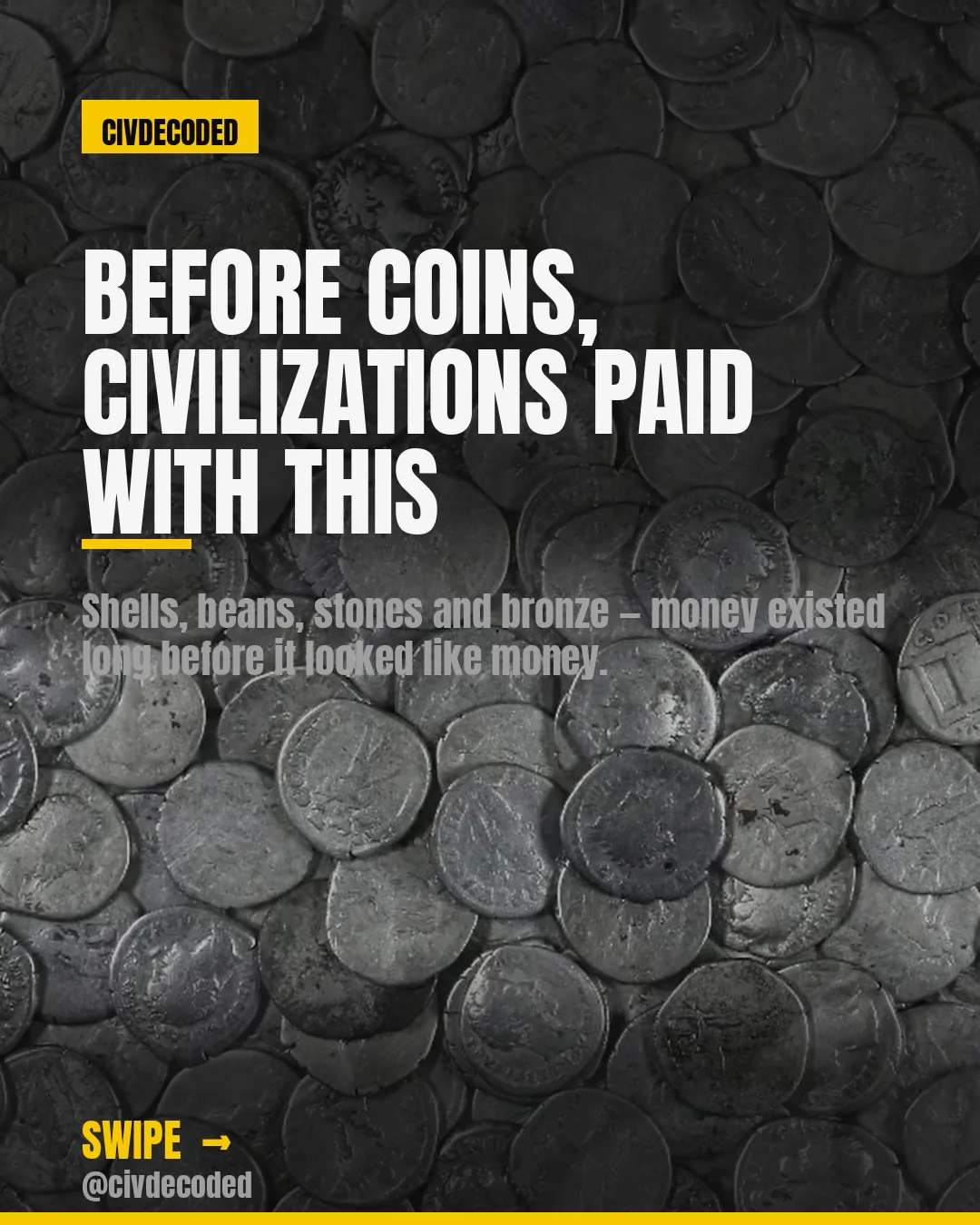
Cover — before coins existed, civilizations paid with shells, beans, stones and bronze.
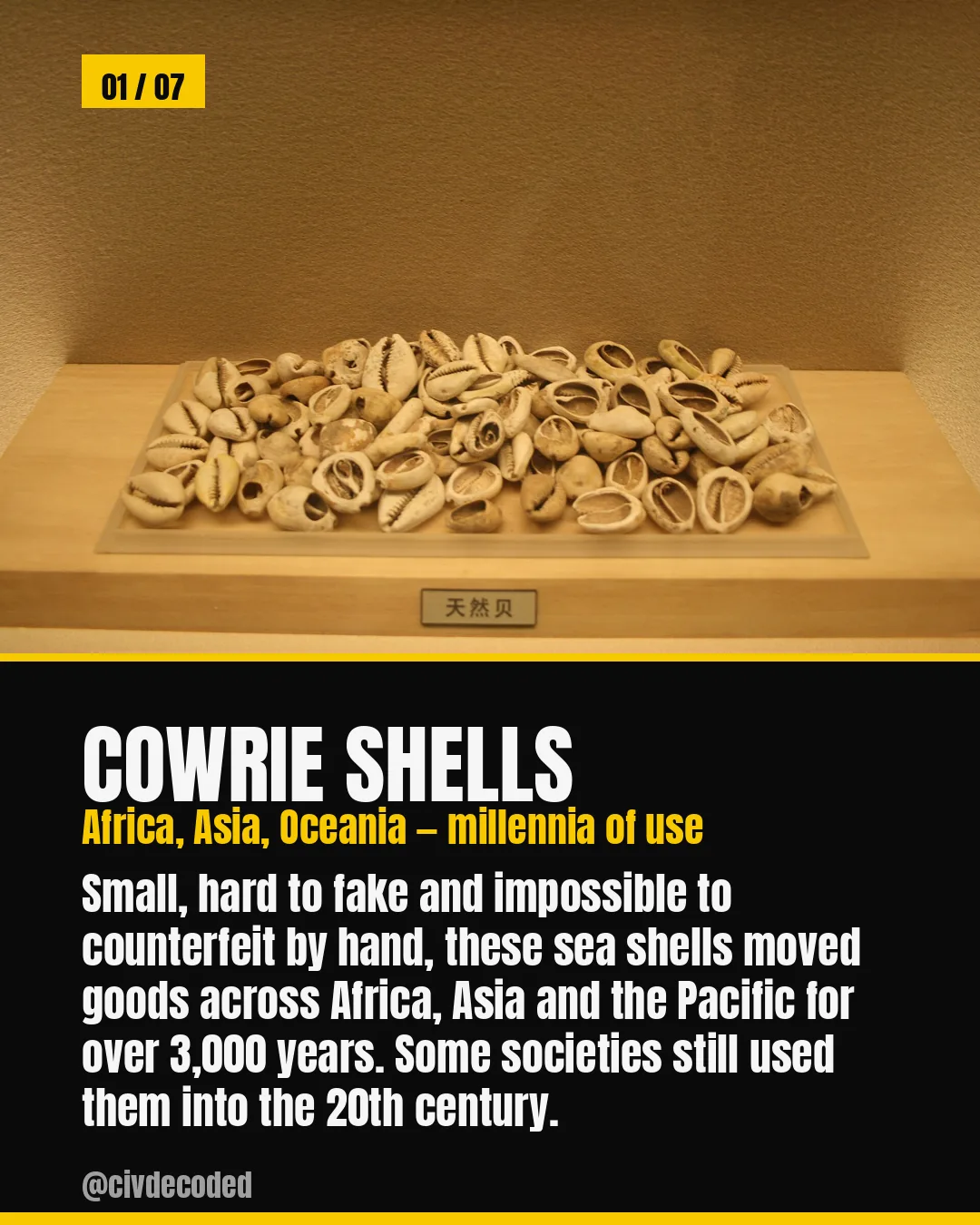
Cowrie Shells — Africa, Asia and Oceania used these sea shells as currency for over 3,000 years, into the 20th century.
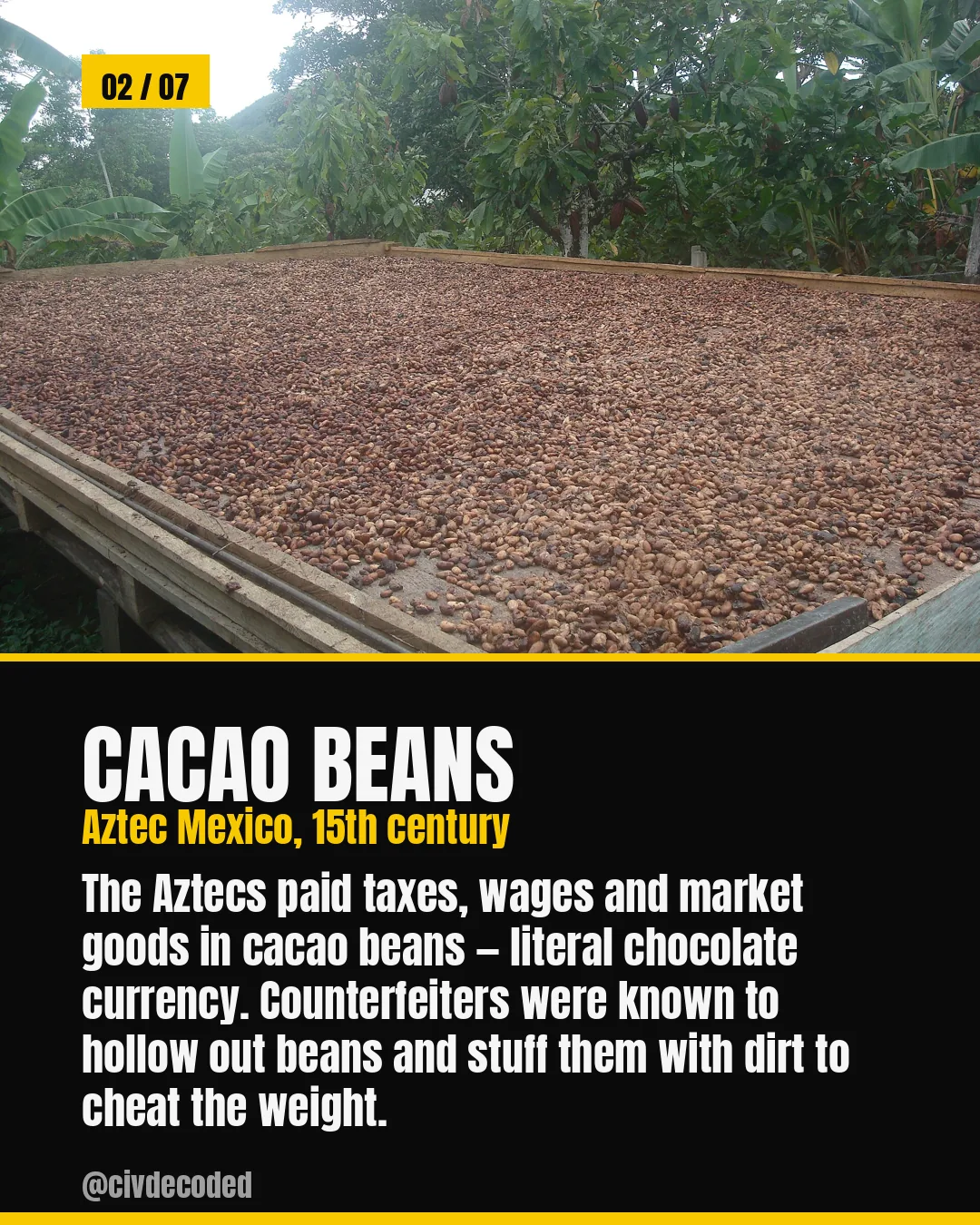
Cacao Beans — Aztec Mexico paid taxes, wages and market goods in cacao beans; counterfeiters hollowed them out and stuffed them with dirt.
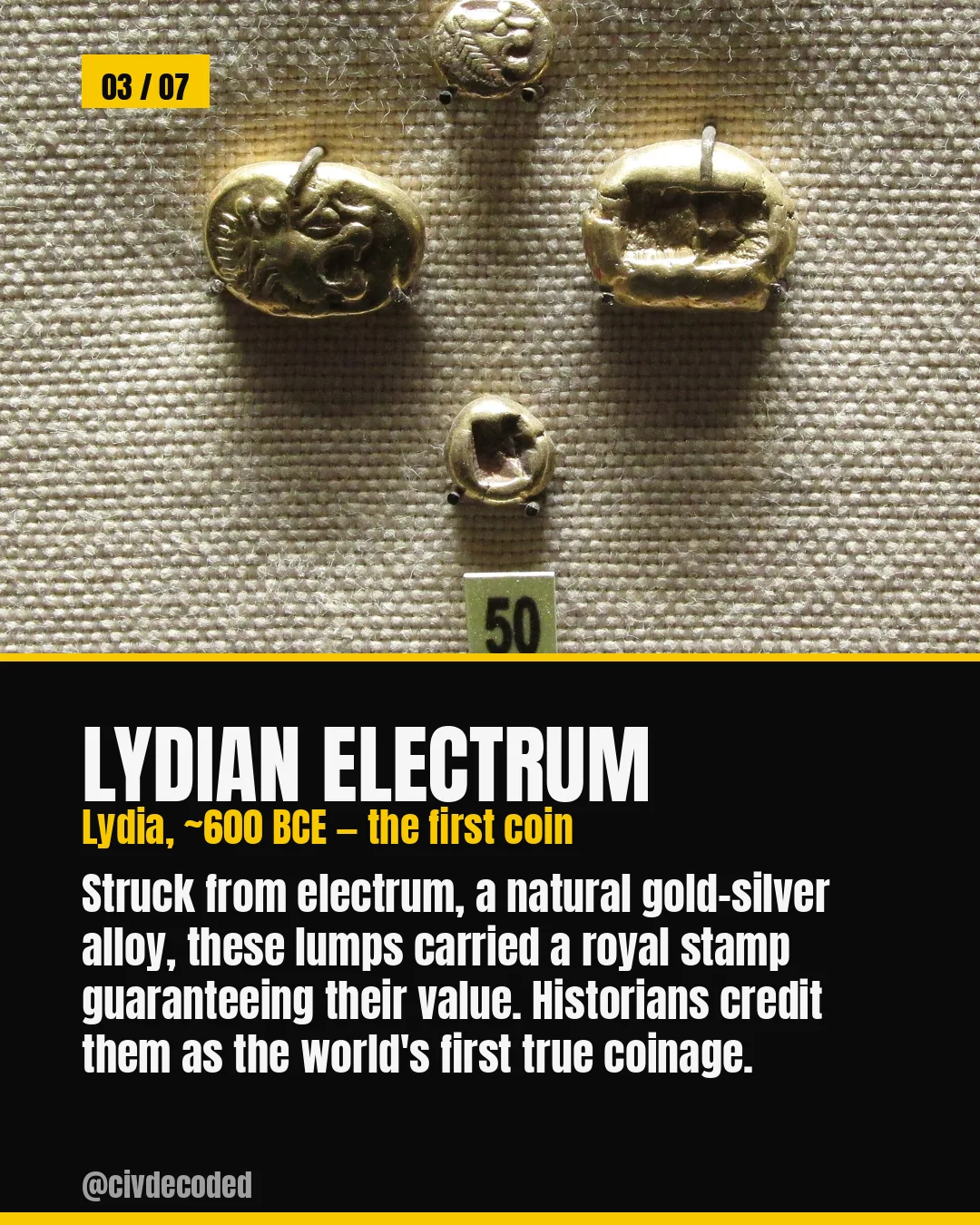
Lydian Electrum — Lydia, ~600 BCE, struck the world's first true coinage from a natural gold-silver alloy.
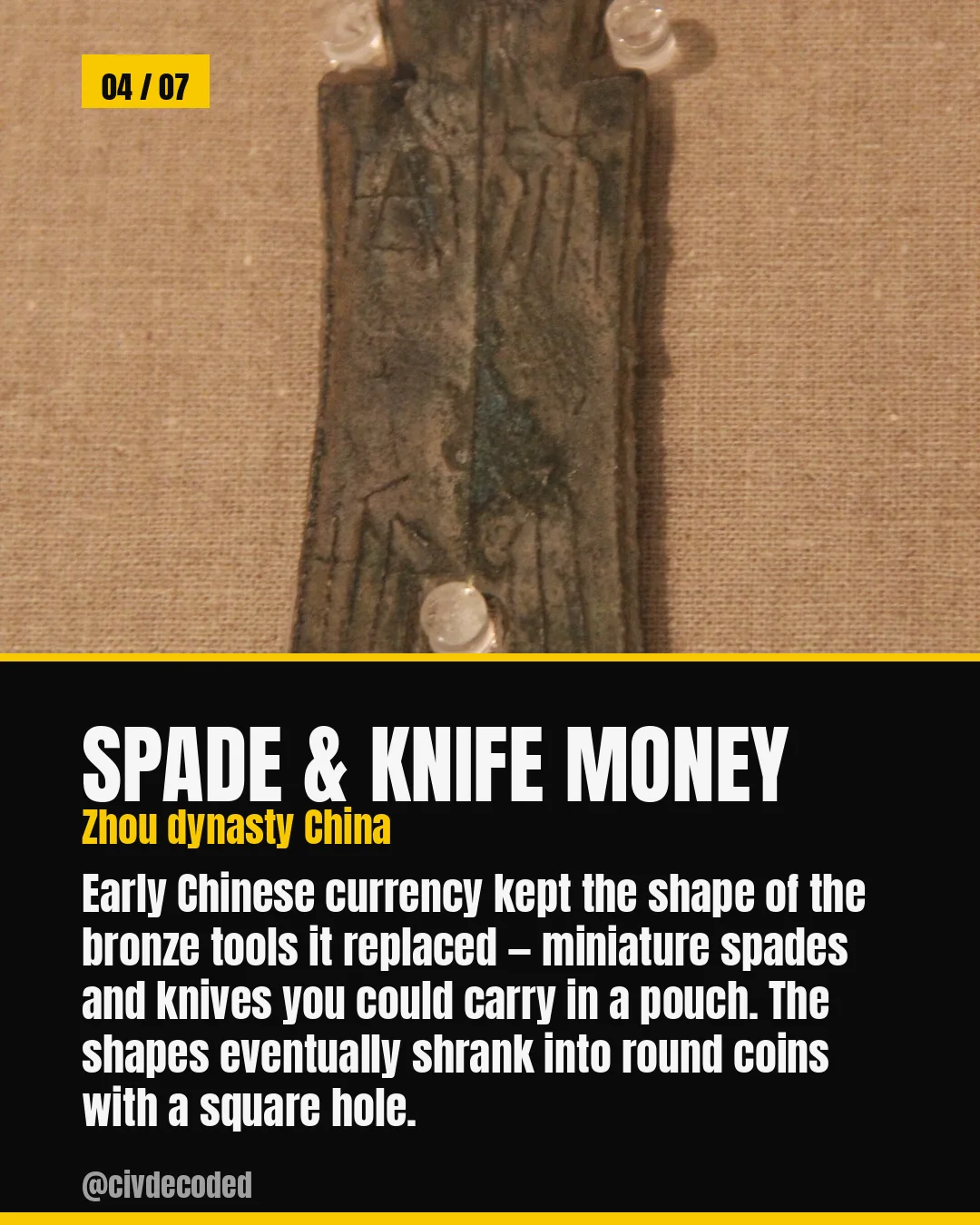
Spade and Knife Money — Zhou dynasty China cast currency shaped like the bronze tools it replaced, which eventually shrank into round coins with a square hole.
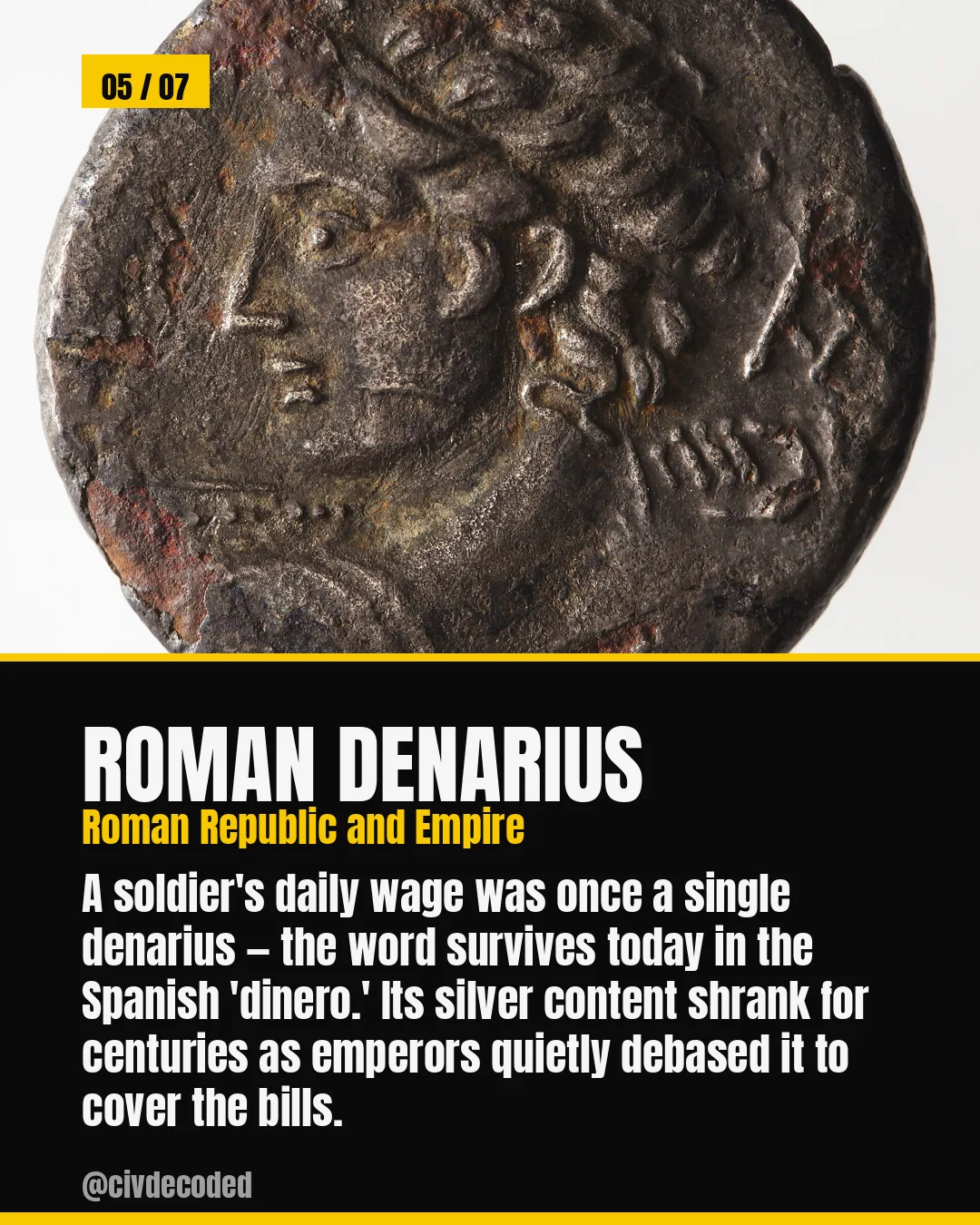
Roman Denarius — a Roman soldier's daily wage, whose name survives today in the Spanish word 'dinero'; its silver content was debased for centuries.
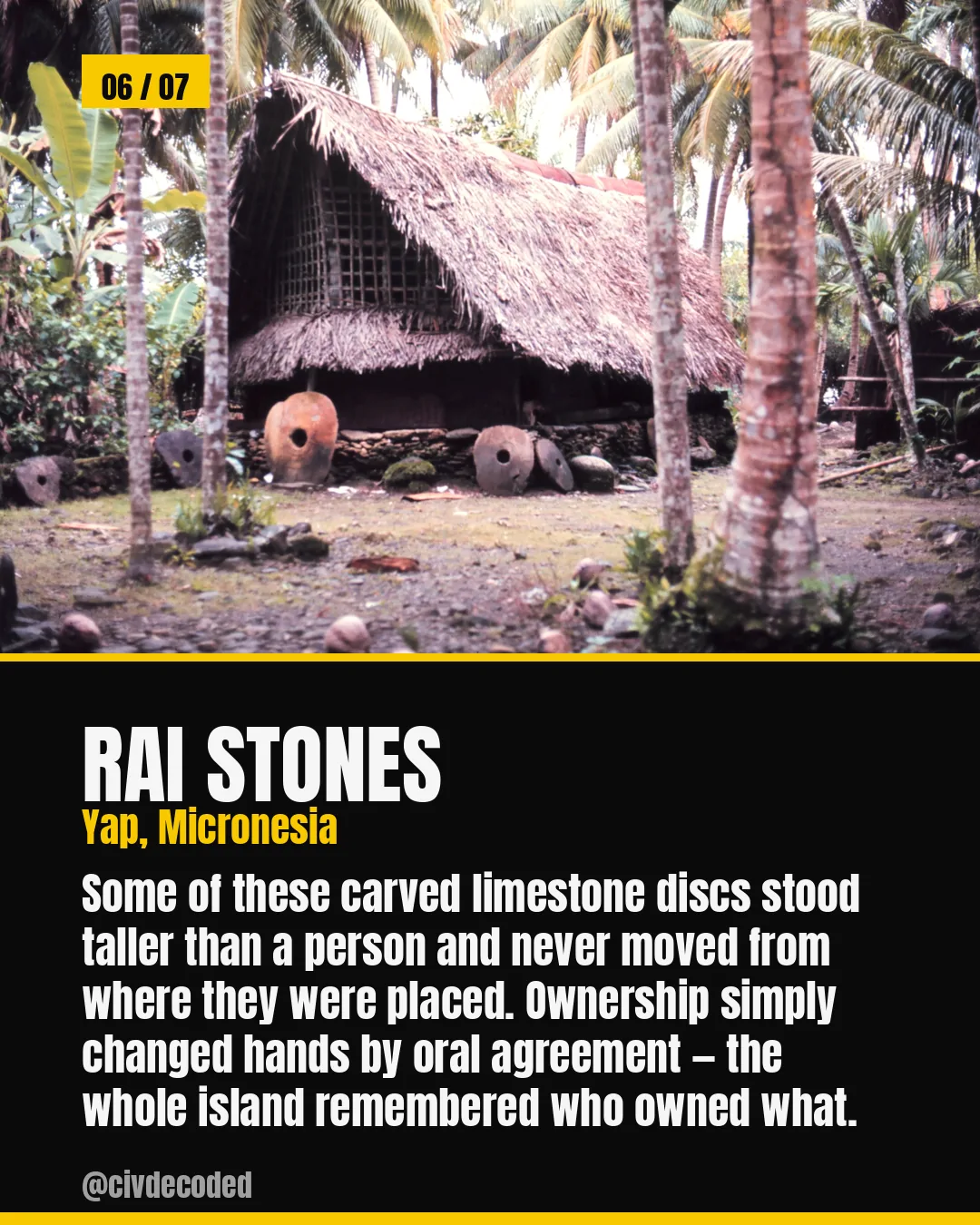
Rai Stones — Yap, Micronesia, used carved limestone discs too large to move; ownership changed hands by oral agreement.
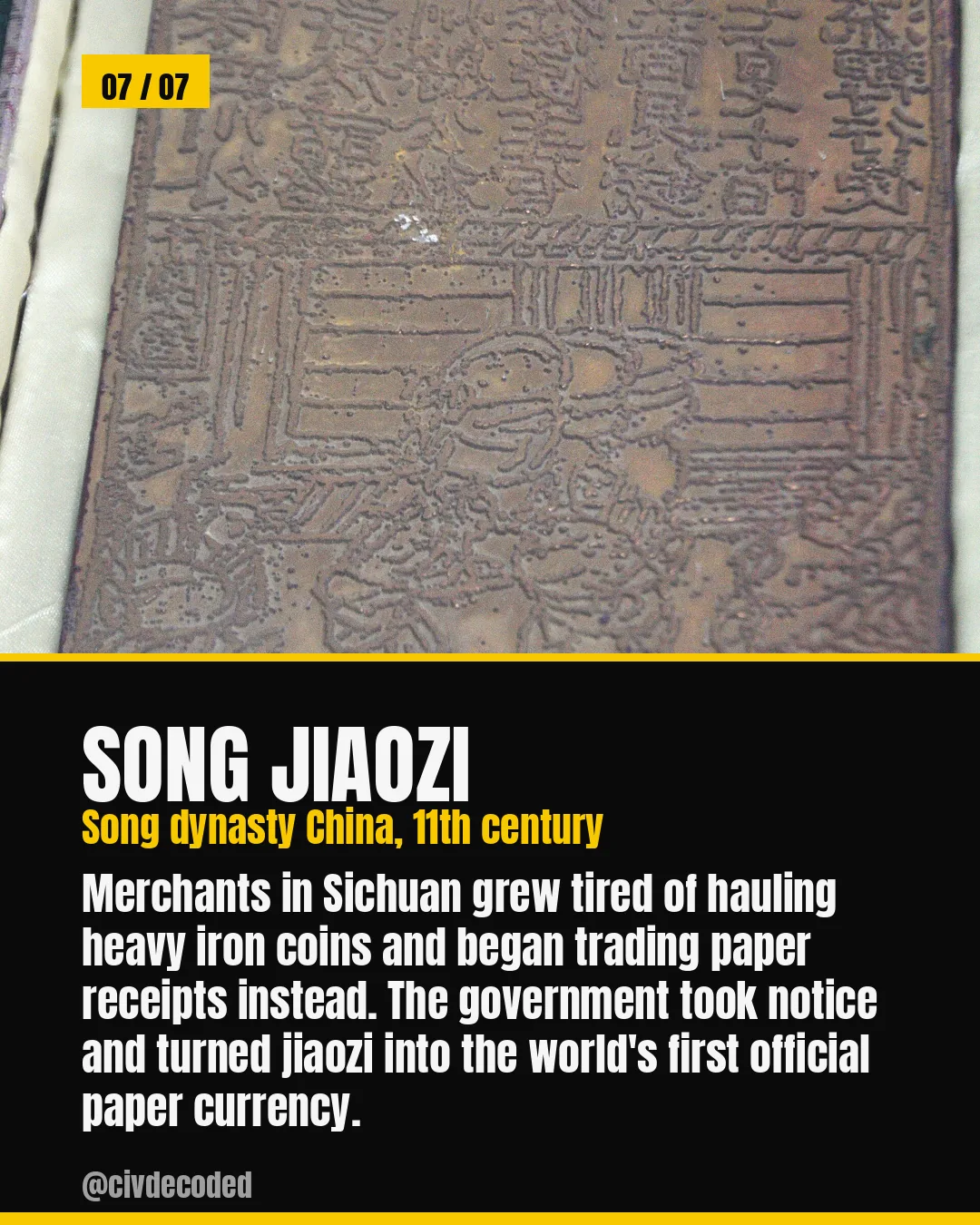
Song Jiaozi — 11th-century Song dynasty China turned merchants' paper receipts into the world's first official paper currency.
Follow CivDecoded for more history, decoded through data.

1 / 9

Cowrie shells moved goods across Africa, Asia and the Pacific for over 3,000 years. The Aztecs paid taxes in cacao beans — and counterfeiters hollowed them out to cheat the weight. Lydia struck the first true coin around 600 BCE, while Zhou dynasty China shrank bronze tools into spade and knife money. Rome paid soldiers in denarius, Yap islanders never moved their giant stone currency, and Song dynasty China invented paper money because iron coins got too heavy to haul.