← All carousels

One people, 5,000 years ago. Half the planet speaks them now.

Eight branches of one language family — from Greek philosophy to the English you're reading this in.
Cover — one people, 5,000 years ago. Half the planet speaks them now.
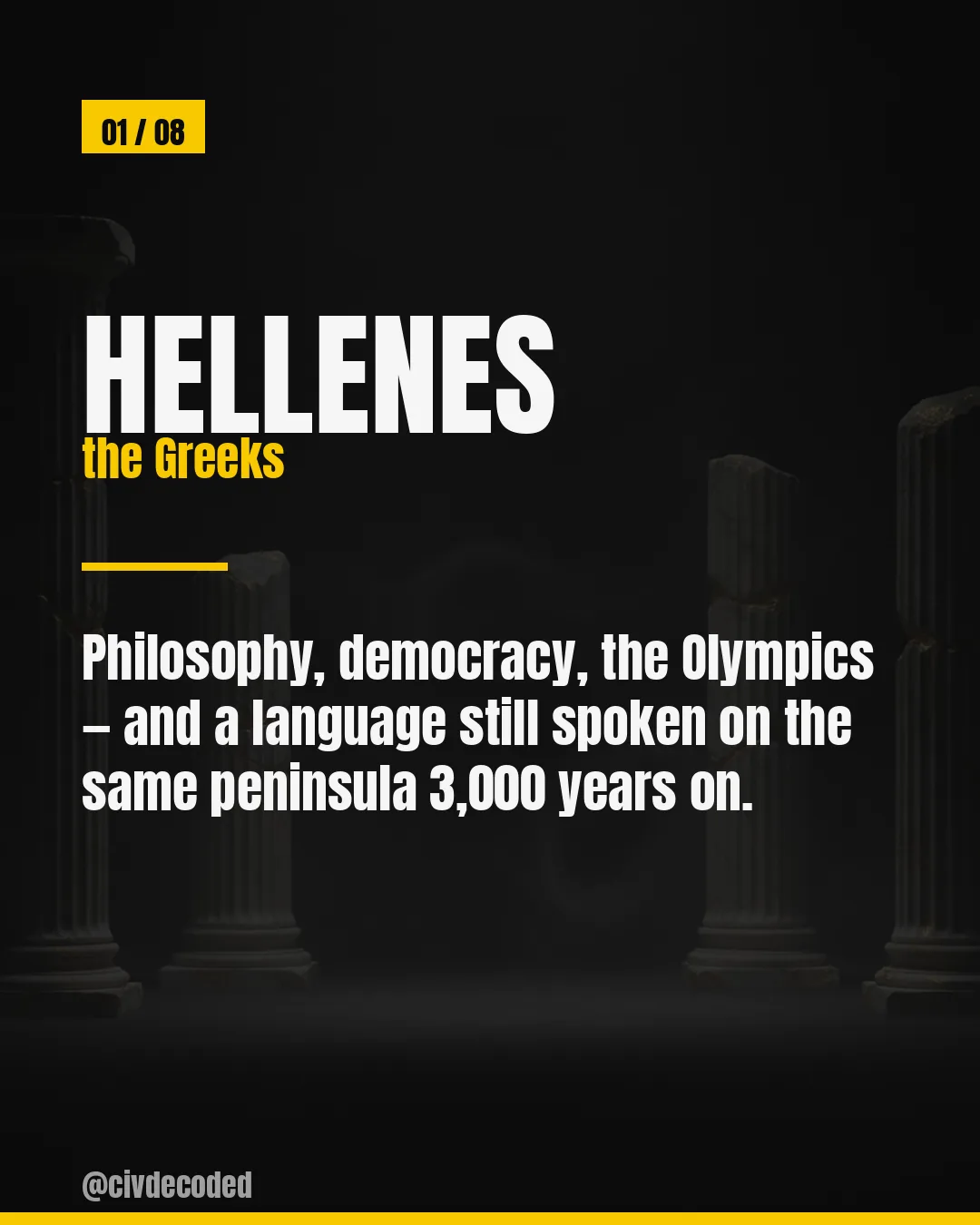
Hellenes (the Greeks) — philosophy, democracy, and the Olympics from a language still spoken on the same peninsula 3,000 years later
Italics (the Latins) — Rome's Latin shattered into Portuguese, Spanish, French, Italian, and Romanian
Celts (the western edge) — once across all of Europe, surviving now in Irish, Welsh, and Breton
Germanic (the north) — Goths, Franks, Vikings, and the English language itself
Slavs (the east) — Russian, Polish, Serbian, Czech, the branch with the most speakers in Europe today
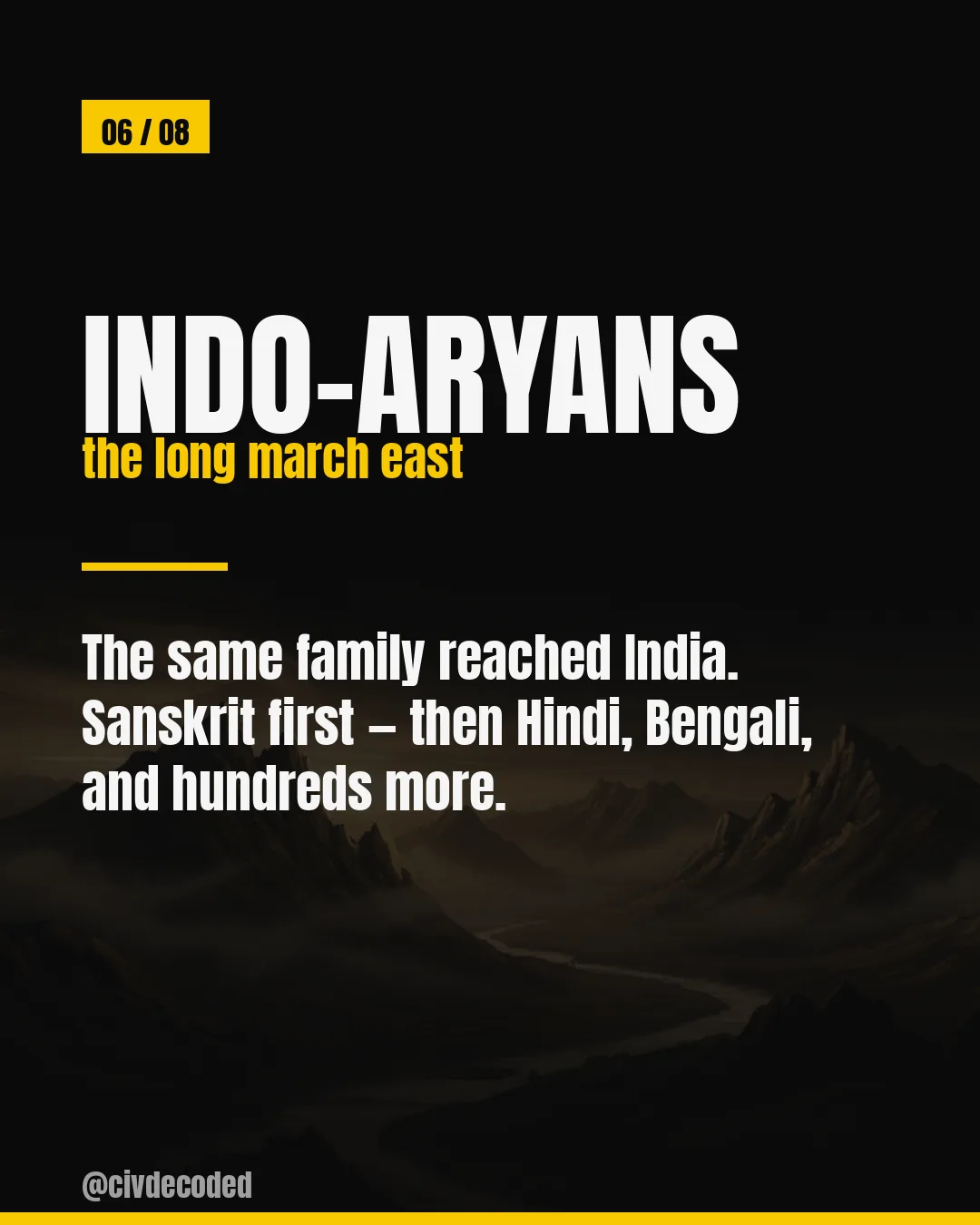
Indo-Aryans (the long march east) — Sanskrit first, then Hindi, Bengali, and hundreds more
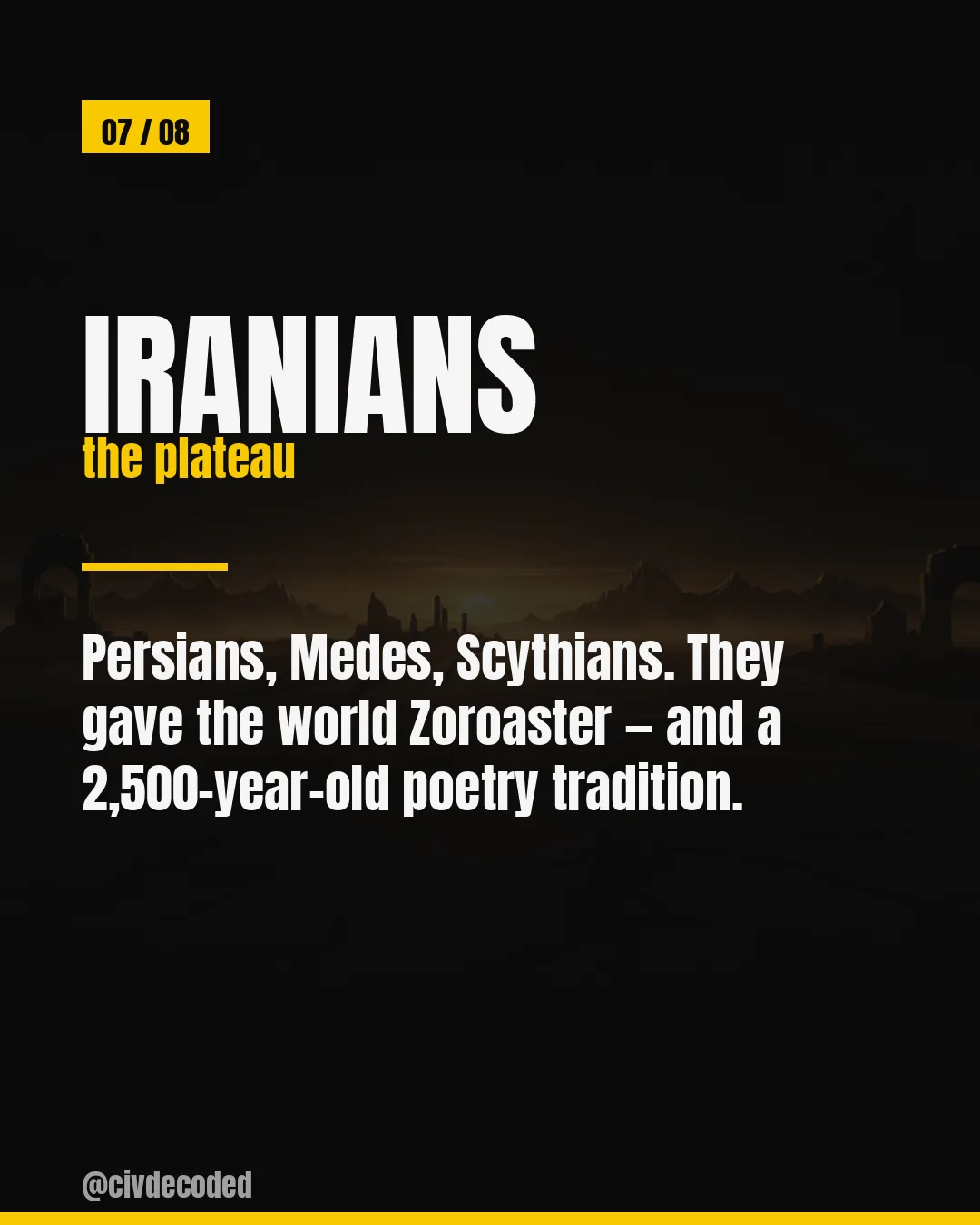
Iranians (the plateau) — Persians, Medes, and Scythians, who gave the world Zoroaster and a 2,500-year-old poetry tradition
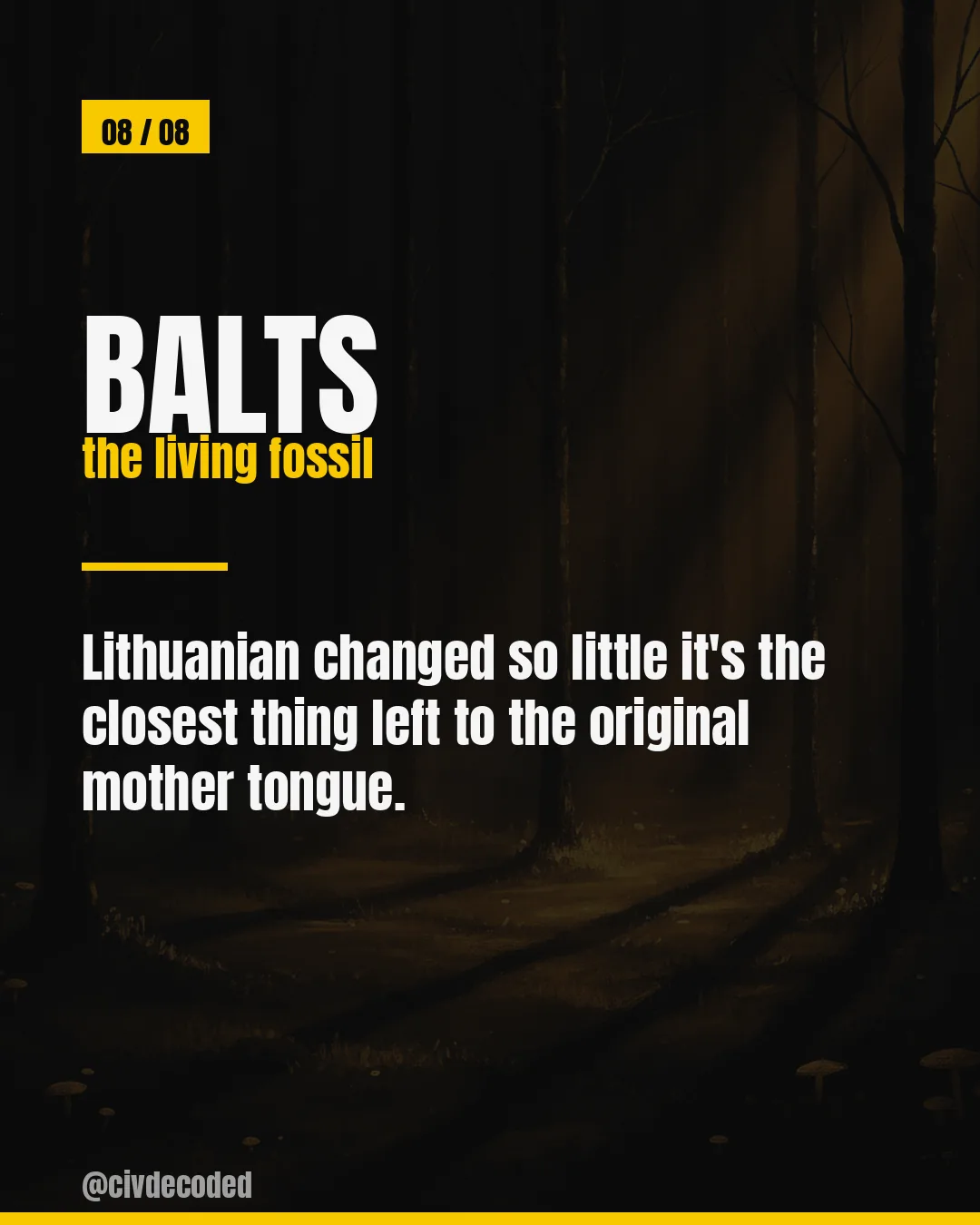
Balts (the living fossil) — Lithuanian changed so little it's the closest thing left to the original mother tongue
Follow CivDecoded for more history, decoded through data.

1 / 10

From a single steppe tongue 5,000 years ago came eight branches spoken by nearly 3 billion people today. Greek gave the world philosophy and democracy; Rome's Latin shattered into Portuguese, Spanish, French, Italian, and Romanian; Lithuanian changed so little it's the closest thing left to the original mother tongue.