← All carousels

Nation, state, people, ethnicity: not the same word.

Six concepts that decode the language of group identity — and the gap between them where most wars begin.
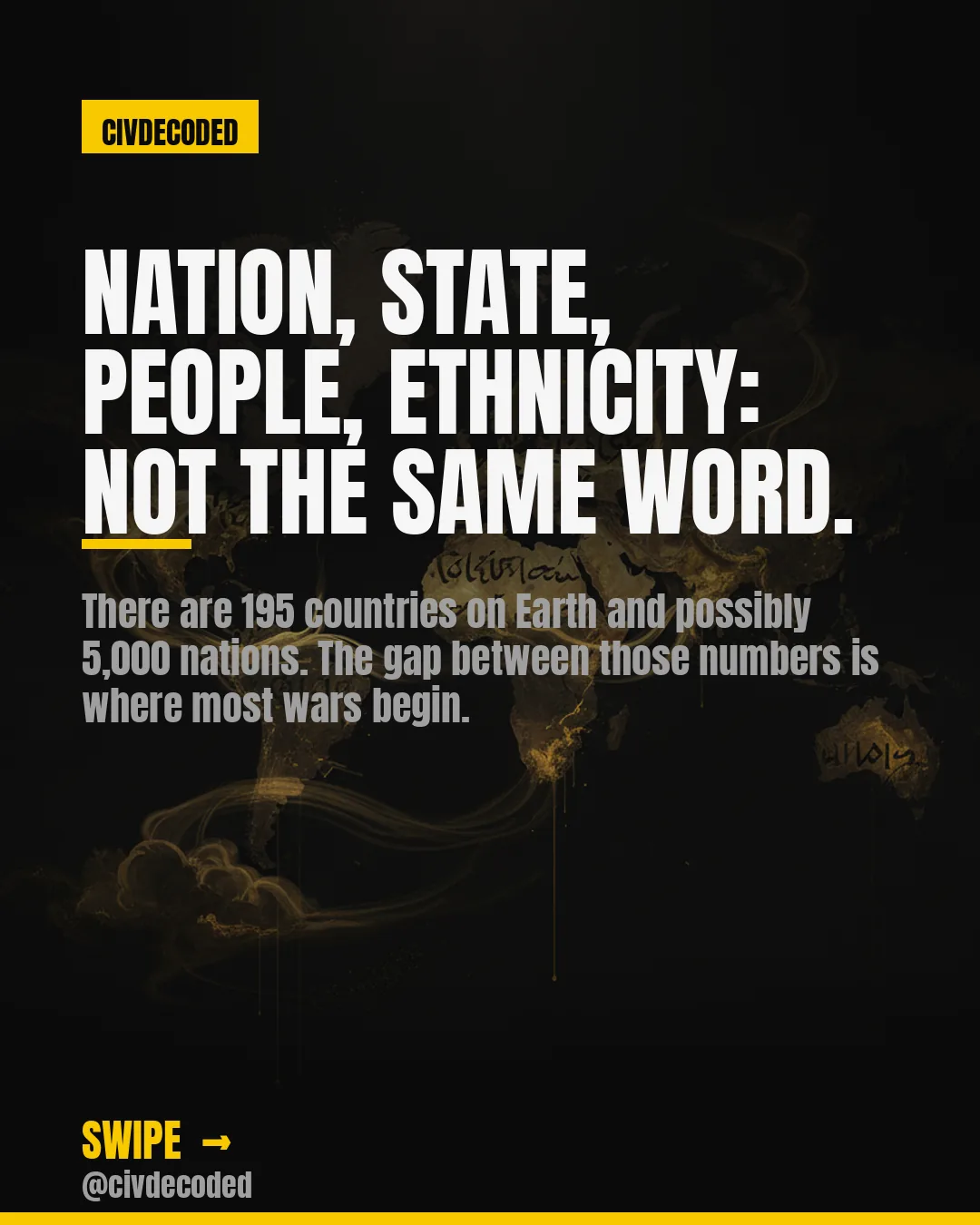
Cover — nation, state, people, ethnicity: not the same word. 195 countries, possibly 5,000 nations.
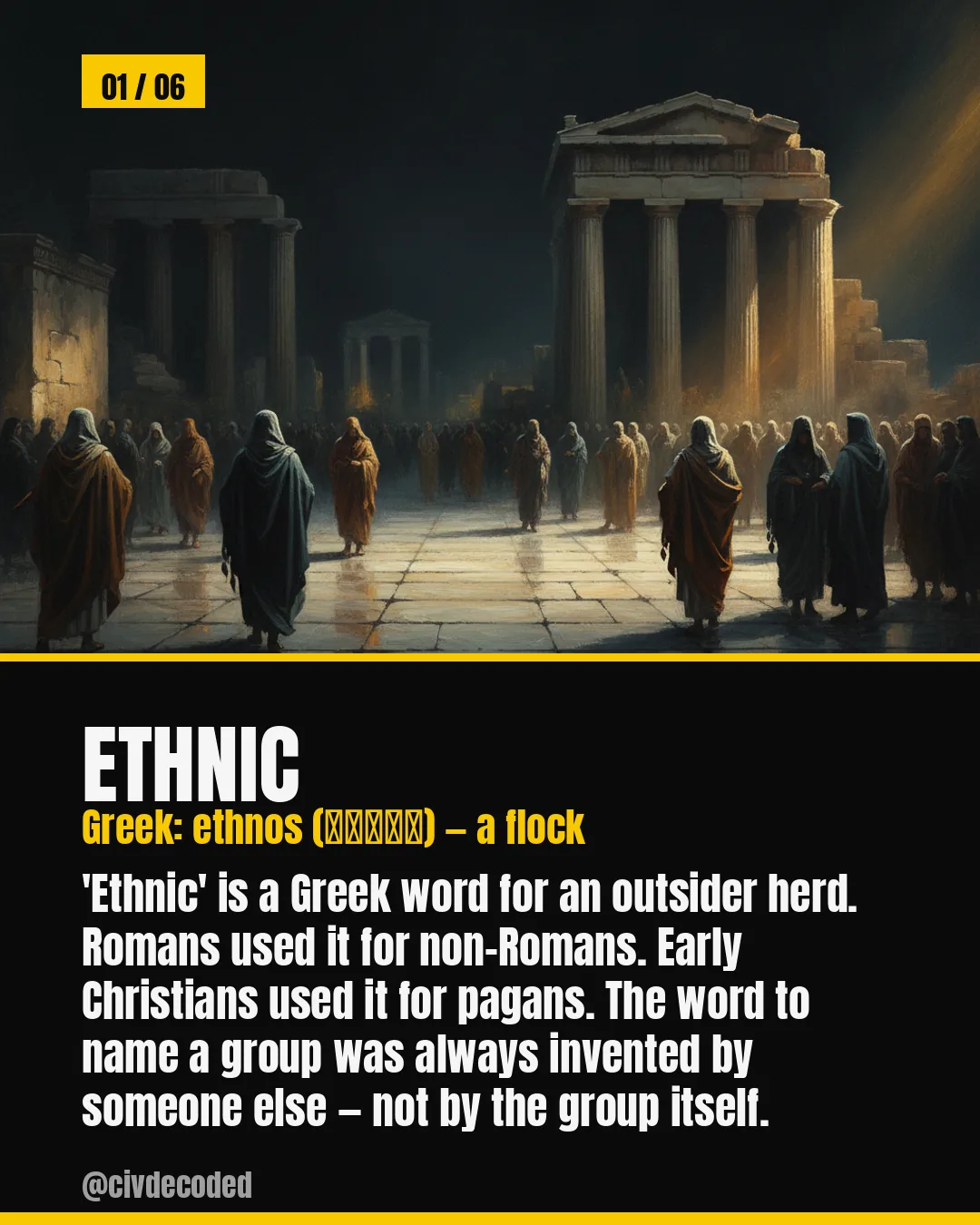
Ethnic (Greek: ethnos, 'a flock') — a word originally for an outsider herd, used by Romans for non-Romans and early Christians for pagans; group names were always invented by someone else.
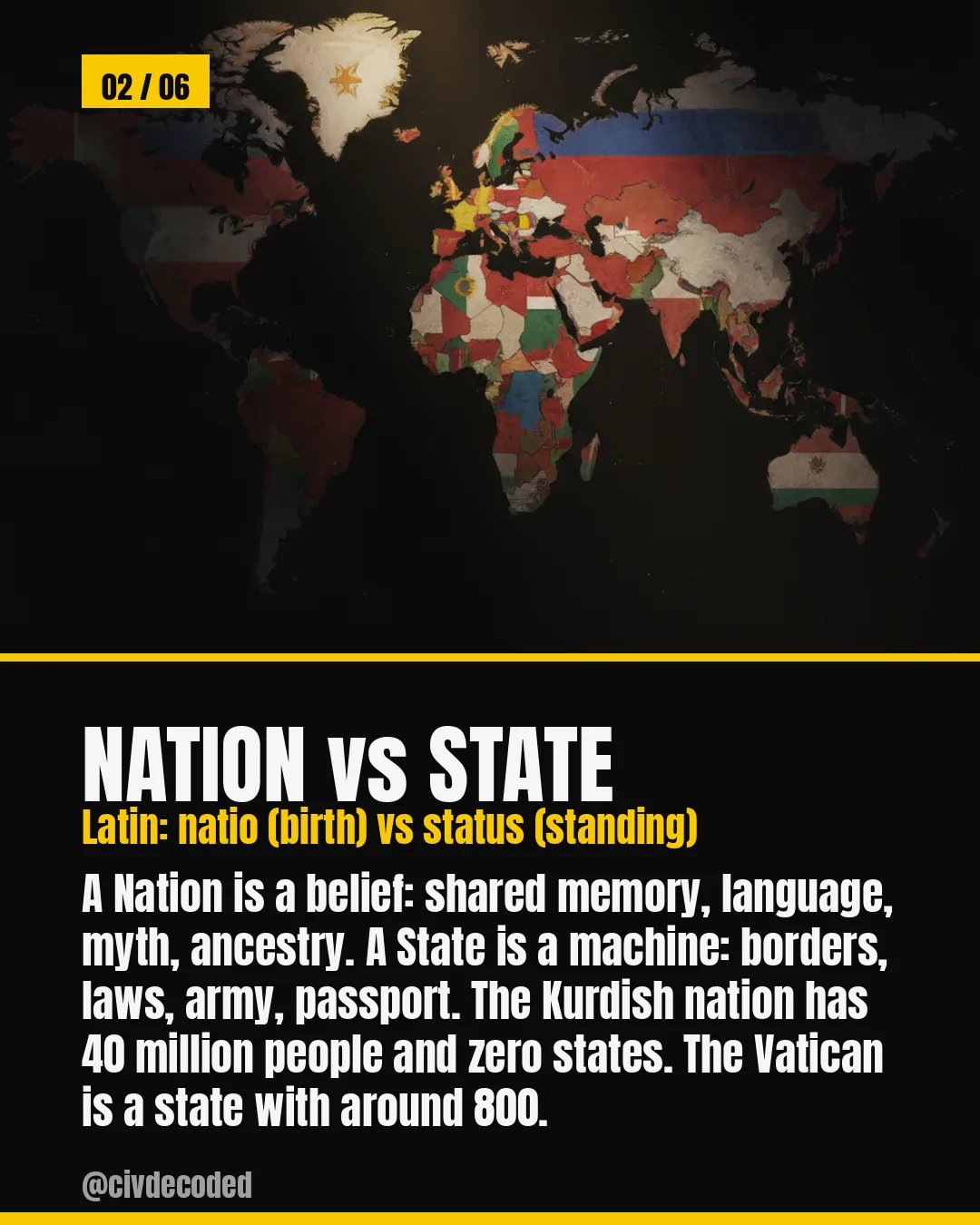
Nation vs State (Latin: natio/status) — a Nation is a shared belief in memory and ancestry, a State is a machine of borders and law; the Kurdish nation has 40 million people and zero states, while Vatican City is a state with around 800.
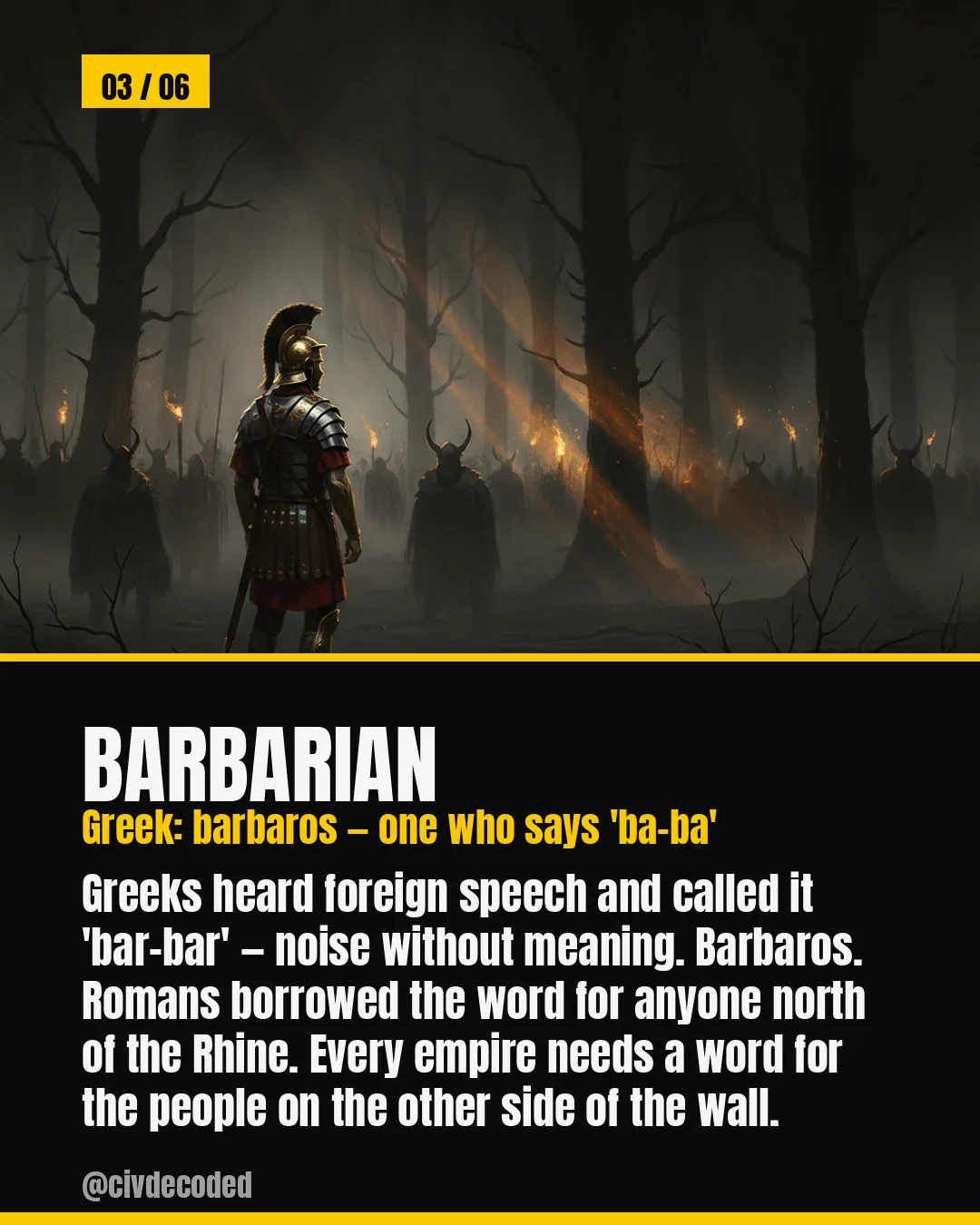
Barbarian (Greek: barbaros, 'one who says ba-ba') — Greeks heard foreign speech as meaningless noise; Romans borrowed the word for anyone north of the Rhine.
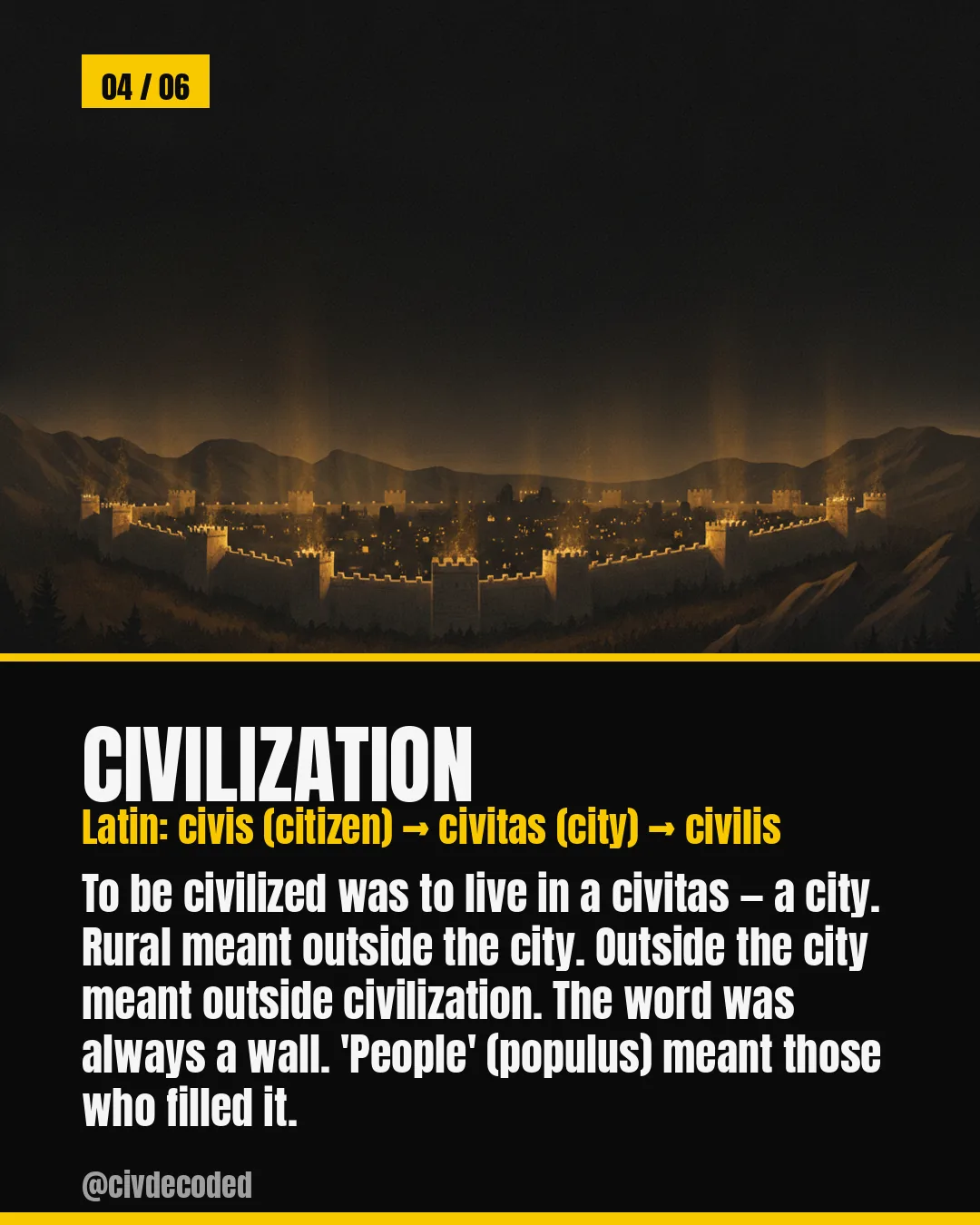
Civilization (Latin: civis/civitas) — to be civilized meant living inside a civitas, a city; outside the city meant outside civilization.
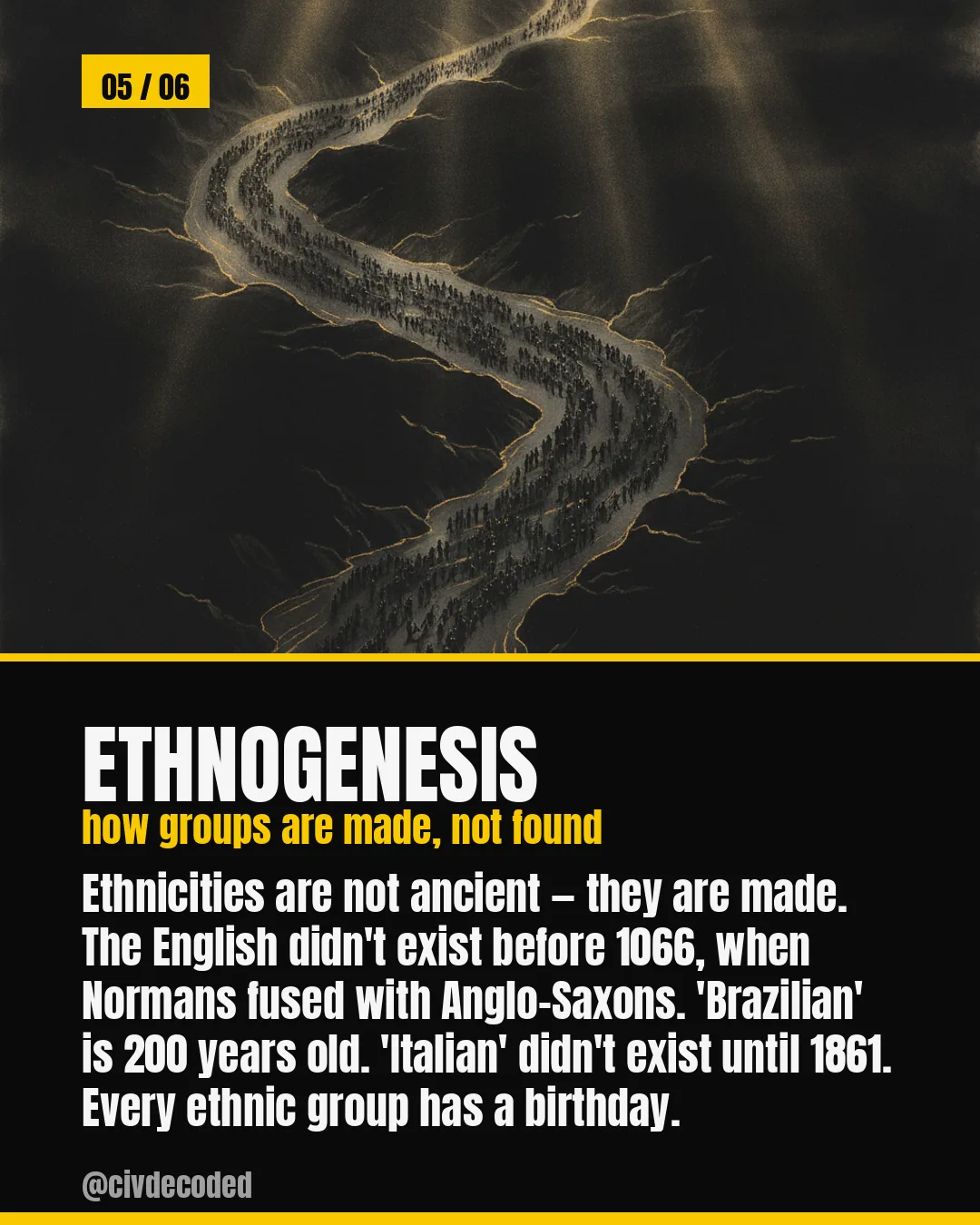
Ethnogenesis — ethnicities are made, not ancient: the English didn't exist before 1066, 'Brazilian' is 200 years old, and 'Italian' didn't exist until 1861.
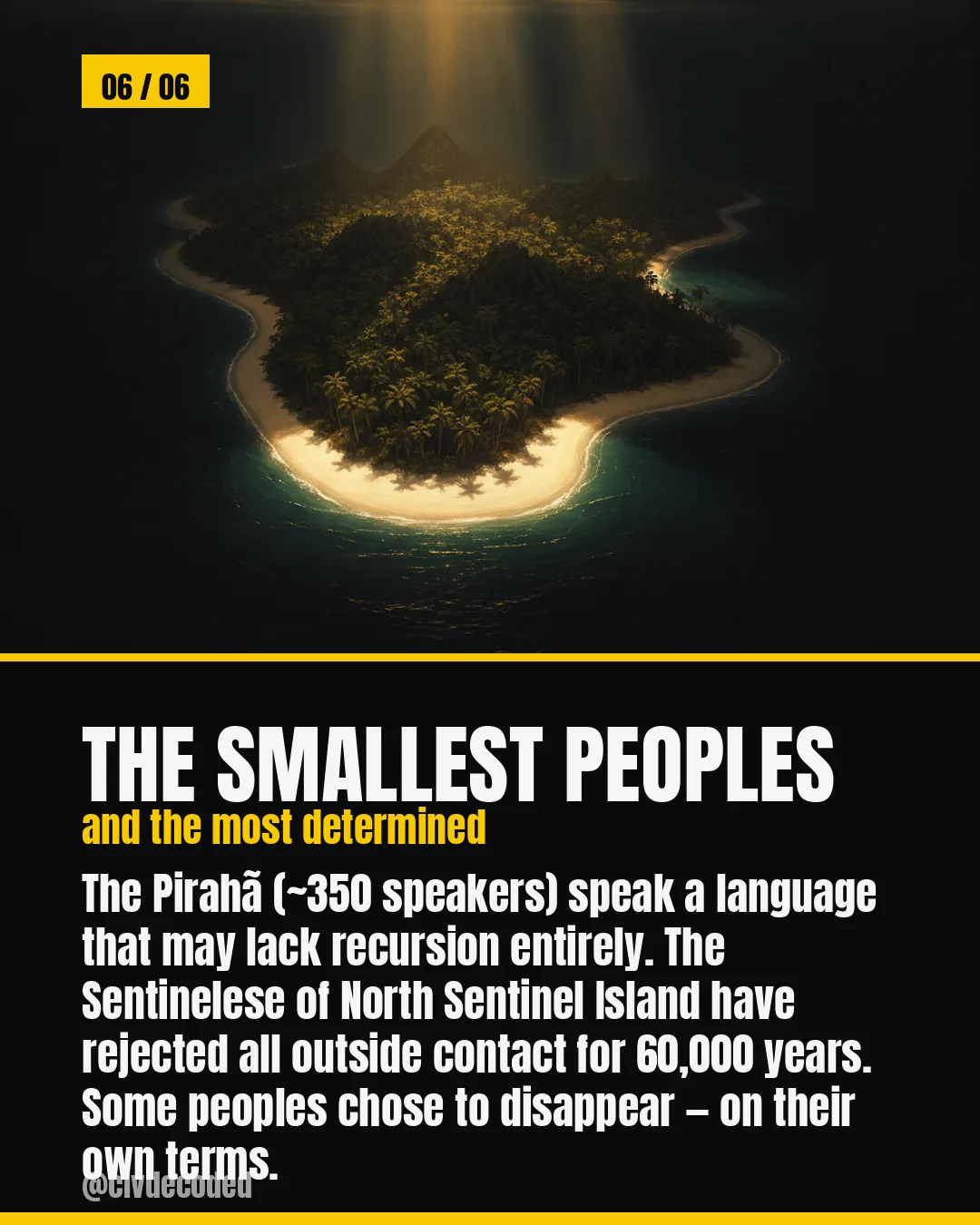
The Smallest Peoples — the Piraha (~350 speakers) may speak a language without recursion, and the Sentinelese have rejected all outside contact for 60,000 years.
Follow CivDecoded for more history, decoded through data.

1 / 8

There are 195 countries on Earth and possibly 5,000 nations — and the words used to describe them were rarely coined by the group itself. 'Ethnic' and 'barbarian' both started as Greek words for outsiders; 'civilization' comes from the Latin word for city, drawing a line between insiders and everyone else. Ethnic identities aren't ancient either: the English didn't exist before 1066, and 'Italian' wasn't a nationality until 1861 — every ethnic group has a birthday.