← All carousels

Every civilization invented a board game to pass the time.

Different rules, different continents — some are still played today.
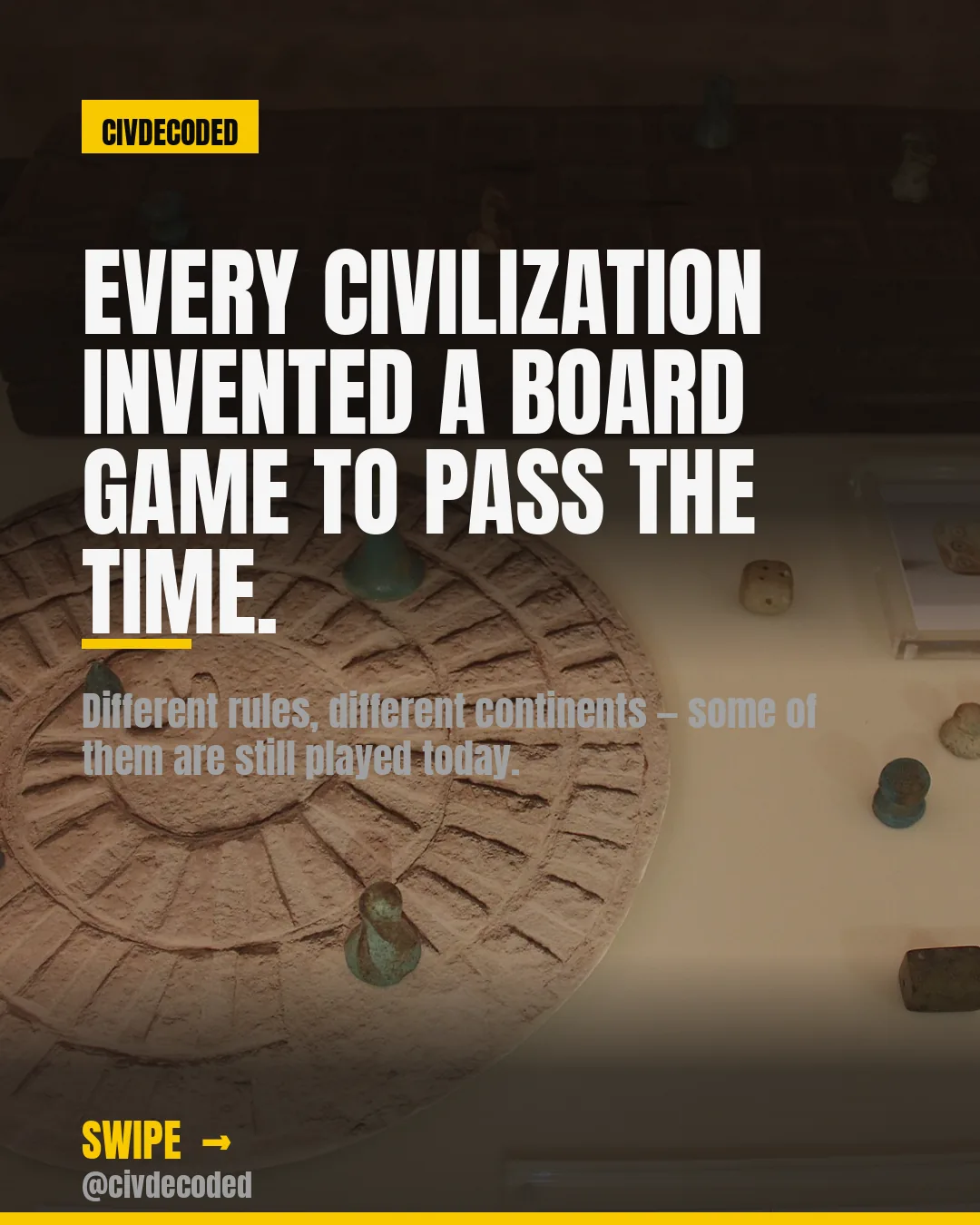
Cover — Every civilization invented a board game to pass the time.
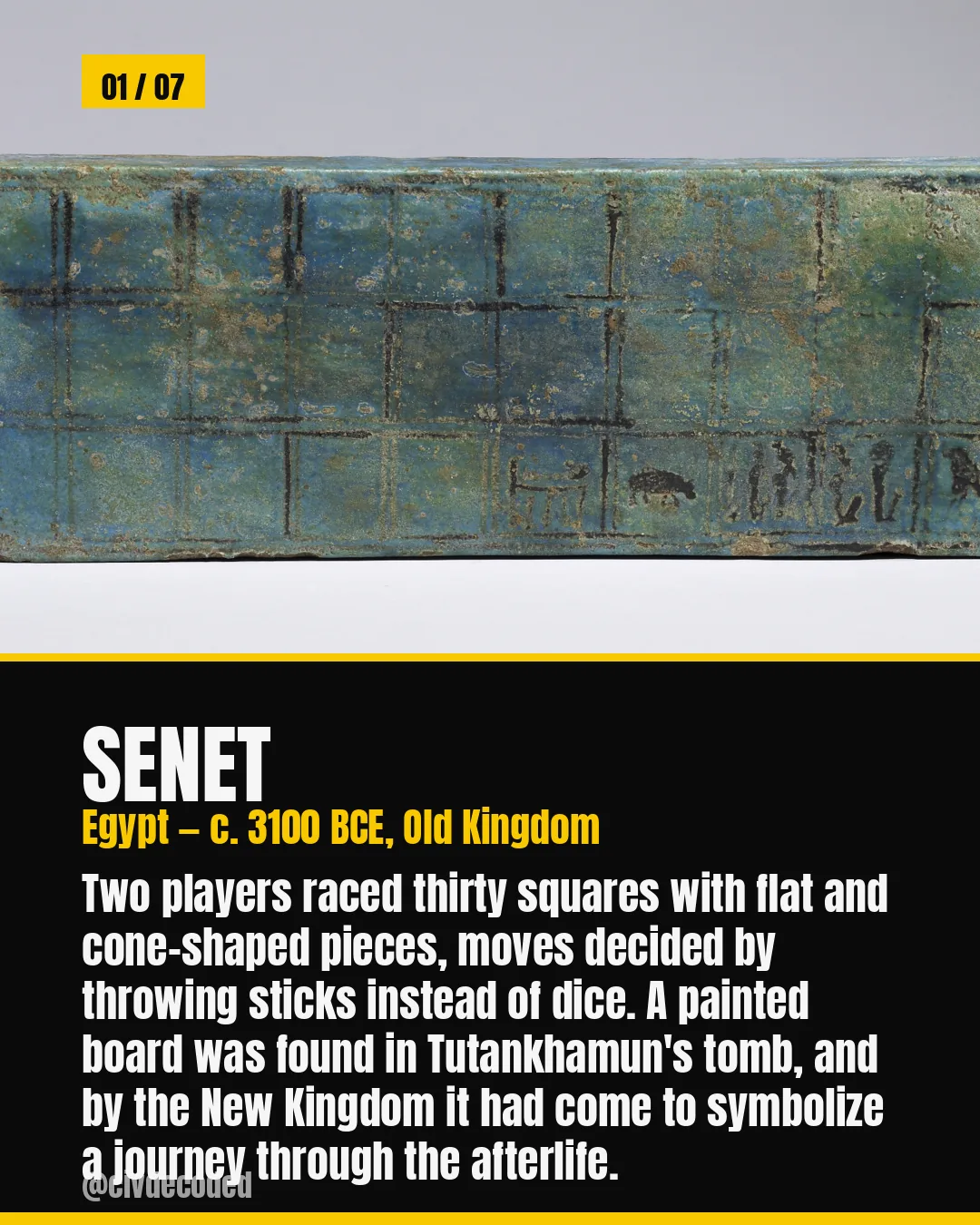
Senet, Egypt c. 3100 BCE — two players raced 30 squares using thrown sticks instead of dice; a board was found in Tutankhamun's tomb and by the New Kingdom it symbolized a journey through the afterlife.
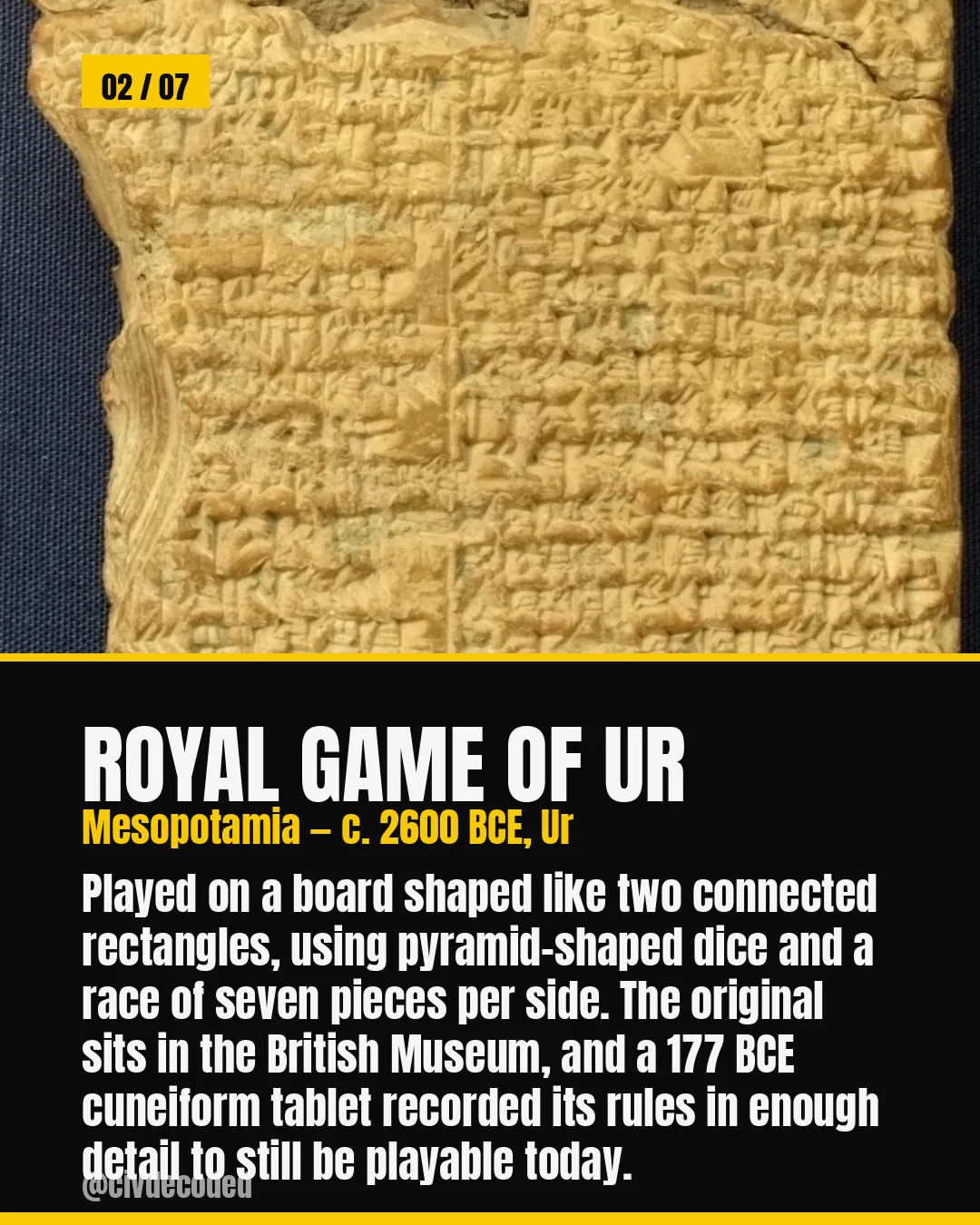
Royal Game of Ur, Mesopotamia c. 2600 BCE — played on two connected rectangles with pyramid-shaped dice and seven pieces per side; the original sits in the British Museum and a 177 BCE cuneiform tablet preserved its rules well enough to still be playable.
Go, China c. 4th century BCE (called Weiqi) — players place black and white stones on a 19x19 grid to surround territory; it's the oldest board game still played in its original form, with more legal positions than atoms in the observable universe.
Chaturanga, India c. 6th century CE, Gupta era — four army divisions (infantry, cavalry, elephants, chariots) on an 8x8 grid, ancestor of chess's pawn, knight, bishop and rook; spread into Persia as shatranj and through the Islamic world into Europe, changing names at every border.
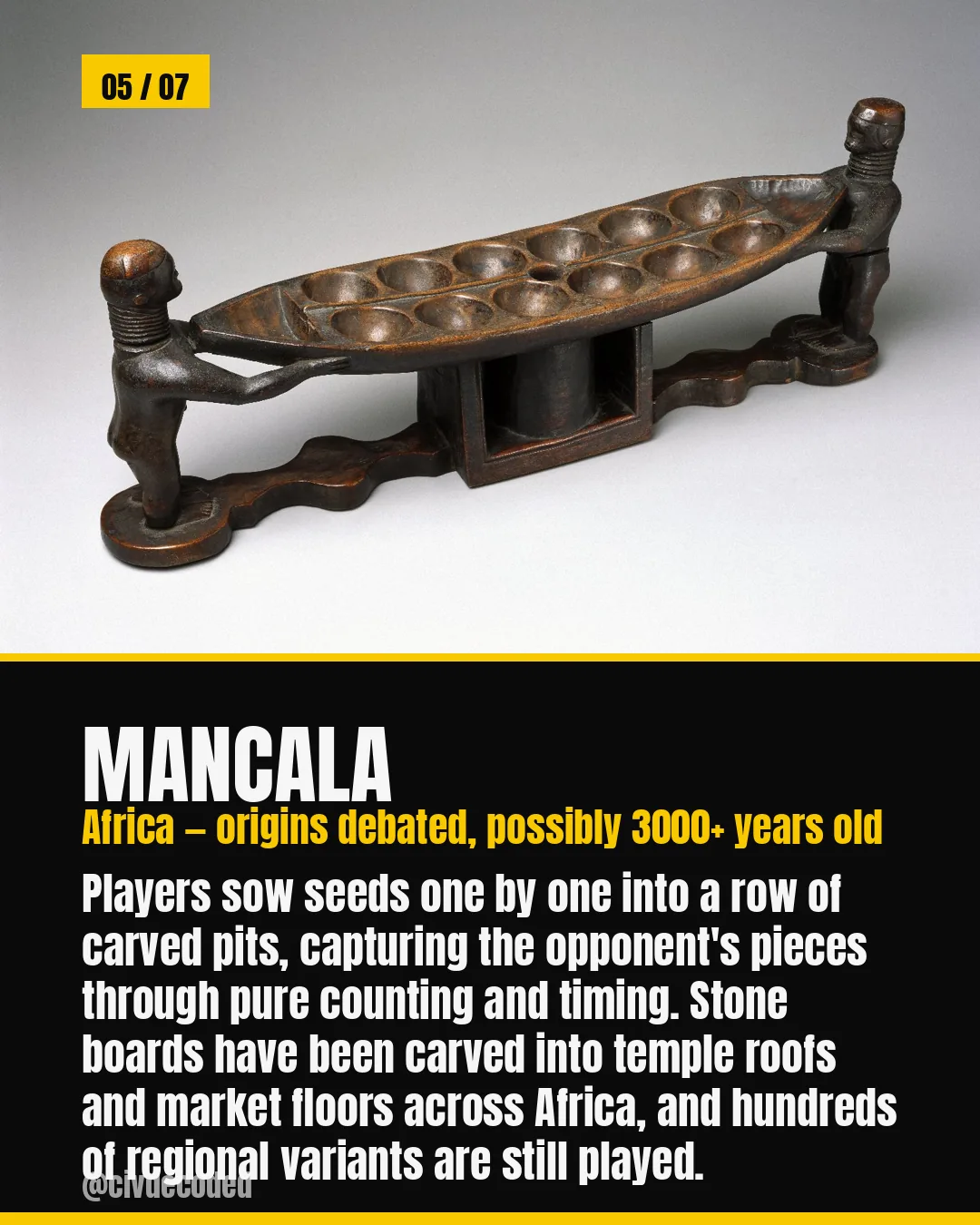
Mancala, Africa, origins debated, possibly 3000+ years old — players sow seeds into carved pits and capture pieces through counting and timing; stone boards have been carved into temple roofs and market floors, with hundreds of regional variants still played.
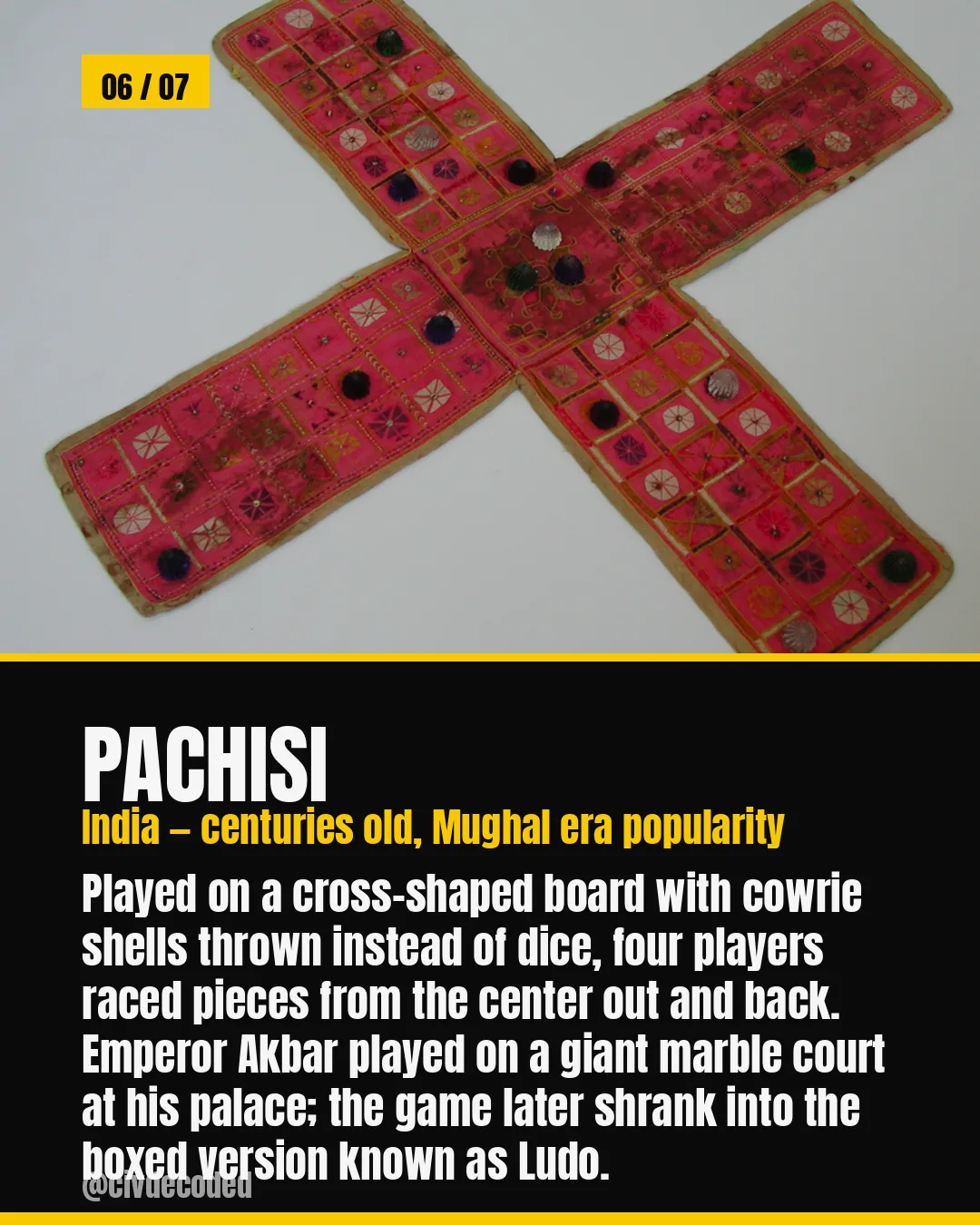
Pachisi, India, Mughal-era popularity — played on a cross-shaped board with cowrie shells thrown instead of dice; Emperor Akbar played on a giant marble court at his palace, and the game later shrank into the boxed version known as Ludo.
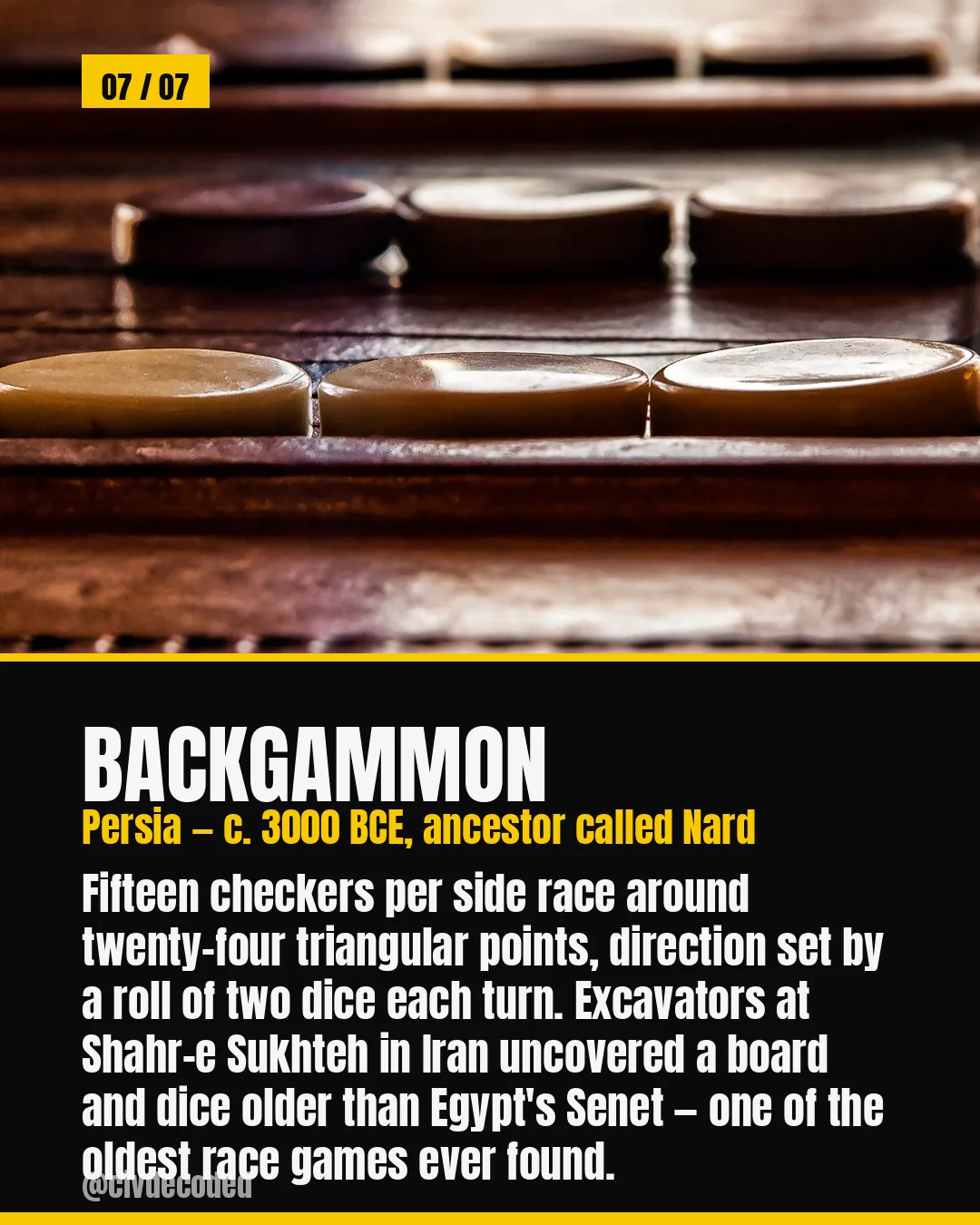
Backgammon, Persia c. 3000 BCE, ancestor called Nard — fifteen checkers per side race around 24 triangular points; excavators at Shahr-e Sukhteh in Iran uncovered a board and dice older than Egypt's Senet, one of the oldest race games ever found.
Follow CivDecoded for more history, decoded through data.

1 / 9

From Senet in Egypt's Old Kingdom to the Royal Game of Ur in Mesopotamia, Go in ancient China, and Chaturanga in Gupta-era India, board games emerged independently across civilizations that never made contact. Persia's ancestor of backgammon predates Egypt's Senet, and Go is the oldest board game still played in its original form. Mancala and Pachisi never stopped being played either — one spread into hundreds of African regional variants, the other shrank into the boxed game known today as Ludo.